September 22, 2005

Literature: Anita Desai


Anita Desai

Anita Desai was born in 1937, in Mussoorie, India; her father was Bengali and mother German. She was educated in Delhi where she received an AB in English Literature from the University of Delhi. Her published works include short stories, children's books, and eight novels. Two of the novels, Clear Light of Day (1980) and In Custody (1984), were short-listed for the Booker Prize. She received the Guardian Award for Children's Fiction for the novel, The Village by the Sea (1982), and the 1978 National Academy of Letters Award for Fire on the Mountain (1977).

Anita Desai is a Fellow of the Royal Society of Literature in London and she has been a member of the Advisory Board for English of the National Academy of Letters in Delhi and a Member of the American Academy of Arts and Letters. She has been Visiting Fellow at Girton College, Cambridge, in England, and has taught writing at Smith College and has been the Purington Professor of English at Mount Holyoke College in the United States. She is married and has four children.

Anita Desai recently joined the Program in Writing and Humanistic Studies in MIT's first professorial appointment primarily in fiction writing in more than 20 years.


Published Works:

1965: Voices in the City
1971: Bye-Bye, Blackbird
1977: Fire on the Mountain
1978: Games at Twilight
1978: Where Shall we go this summer?
1979: The Peacock Garden
1980: Clear Light of Day
1982: The Village by the Sea
1983: Cry, the Peacock
1984: In Custody
1988: Baumgartner's Bombay
1995: Journey to Ithaca
1999: Fasting, Feasting
2000: Diamond Dust: Stories

Literature: Bharati Mukherjee


Bharati Mukherjee
Bharati Mukherjee was born on July 27, 1940 to wealthy parents, Sudhir Lal and Bina Mukherjee in Calcutta, India. She learned how to read and write by the age of three. In 1947, she moved to Britain with her family at the age of eight and lived in Europe for about three and a half years. By the age of ten, Mukherjee knew that she wanted to become a writer, and had written numerous short stories.

After getting her B.A from the University of Calcutta in 1959 and her M.A. in English and Ancient Indian Culture from the University of Baroda in 1961, she came to the United States of America. Having been awarded a scholarship from the University of Iowa, earned her M.F.A. in Creative Writing in 1963 and her Ph.D. in English and Comparative Literature in 1969. While studying at the University of Iowa, she met and married a Canadian student from Harvard, Clark Blaise, on September 19, 1963. The two writers met and, after a brief courtship, married within two weeks. Together, the two writers have produced two books along with their other independent works. Mukherjee's career a professor and her marriage to Blaise Clark has given her opportunities to teach all over the United States and Canada. Currently she is a professor at the University of California, Berkeley.
Published Works:
  • The Tiger's Daughter, Houghton, 1972.
  • Wife, Houghton, 1975.
  • Kautilya's Concept of Diplomacy: A New Interpretation, Minerva, 1976.
  • Days and Nights in Calcutta (nonfiction with Blaise)), Doubleday: Garden City, New York, 1977.
  • An Invisible Woman, McClelland & Stewart, 1981.
  • Darkness, Penguin, 1985.
  • The Sorrow and the Terror: The Haunting Legacy of the Air India Tragedy, (With Blaise) Viking, 1987.
  • The Middleman and Other Stories, Grove, 1988.
  • Jasmine, Grove, 1989.
  • Political Culture and Leadership in India (nonfiction), South Asia, 1991.
  • Regionalism in Indian Perspective (nonfiction), South Asia, 1992.
  • The Holder of the World, Knopf: New York City, 1993.
  • Leave It to Me, A.A. Knopf: New York City, 1997.

September 19, 2005

Bangladesh: My Thinking…


Being a Business Professional I think our growing generation has a great deal of responsibility on our head to create better opportunities for the future.

I believe in a Bangladesh, where we will not fight with each other over our cultural and religious identities but will separate both to claim both. A Bangladesh where we will not make everyone equal by law like the communists of 1970’s but will work to provide equal opportunities for each of the citizen so that they can claim their position on the base of merit and ability. A Bangladesh where our Bengali identity will prevail over the landscape to make a declaration of our flag flying high among the best of the nations ever roamed above the ground.

Millions of people died over one hope that their children will cherish a better life. Still, they are leaving us with a cloud of corruption in our society, a very weak economy and loads of burden regarding our national identity. This is our responsibility to provide better future and better opportunities for our children to come.

Certain people with certain views can differ of course. But the art of democracy teaches us to agree on one point that all of us do not agree on every point. That gives us our own sets of choice over our options. Make the right decision that is all we have to do.

September 15, 2005

Universities: European vs American...


European Universities

Europe created the modern university. Scholars were gathering in Paris and Bologna before America was on the map. Oxford and Cambridge invented the residential university: the idea of a community of scholars living together to pursue higher learning. Germany created the research university. A century ago European universities were a magnet for scholars and a model for academic administrators the world over.


European vs American

As Economist.com survey of higher education explains, since the Second World War Europe has progressively surrendered its lead in higher education to the United States. America boasts 17 of the world's top 20 universities, according to a widely used global ranking by the Shanghai Jiao Tong University. American universities currently employ 70% of the world's Nobel prize-winners, 30% of the world's output of articles on science and engineering, and 44% of the most frequently cited articles. No wonder developing countries now look to America rather than Europe for a model for higher education.

Why have European universities declined so precipitously in recent decades? And what can be done to restore them to their former glory? The answer to the first question lies in the role of the state. American universities get their funding from a variety of different sources, not just government but also philanthropists, businesses and of course, the students themselves. European ones are largely state-funded. The constraints on state funding mean that European governments force universities to “process” more and more students without giving them the necessary cash—and respond to the universities' complaints by trying to micromanage them. Inevitably, quality has eroded. Yet, as the American model shows, people are prepared to pay for good higher education, because they know they will benefit from it: that's why America spends twice as much of its GDP on higher education as Europe does.

The answer to the second question is to set universities free from the state. Free universities to run their internal affairs: how can French universities, for example, compete for talent with their American rivals when professors are civil servants? And free them to charge fees for their services—including, most importantly, student fees.

Asian Universities

The standard European retort is that if people have to pay for higher education, it will become the monopoly of the rich. But spending on higher education in Europe is highly regressive (more middle-class students go to university than working-class ones). And higher education is hardly a monopoly of the rich in America: a third of undergraduates come from racial minorities, and about a quarter come from families with incomes below the poverty line. The government certainly has a responsibility to help students to borrow against their future incomes. But student fees offer the best chance of pumping more resources into higher education. They also offer the best chance of combining equity with excellence.

Europe still boasts some of the world's best universities, and there are some signs that policymakers have realized that their system is failing. Britain, the pacemaker in university reform in Europe, is raising fees. The Germans are trying to create a Teutonic Ivy League. European universities are aggressively wooing foreign students. Pan-European plans are encouraging student mobility and forcing the more eccentric European countries (notably Germany) to reform their degree structures. But the reforms have been too tentative.

America is not the only competition Europe faces in the knowledge economy. Emerging countries have cottoned on to the idea of working smarter as well as harder. Singapore is determined to turn itself into a “knowledge island”. India is sprucing up its institutes of technology. In the past decade China has doubled the size of its student population while pouring vast resources into elite universities. Forget about catching up with America; unless Europeans reform their universities, they will soon be left in the dust by Asia as well.

September 14, 2005

Satyajit Ray: a Bengali Filmmaker...

Satyajit Ray
A Bengali Filmmaker

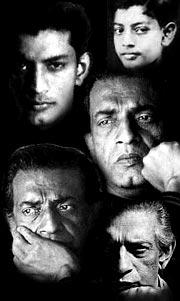
Satyajit Ray (May 2, 1921 - April 23, 1992) was an Academy Award winning Bengali film director whose films are perhaps the greatest testament to Bengali and Indian cinema. He is mostly known for his Apu trilogy - the films Pather Panchali (Song of the Road), Aparajito (The Unconquered), and Apur Sansar (The World of Apu). - but has a large collection of works that are acclaimed among the world film industry, most notably by the likes of Akira Kurosawa, Martin Scorsese and Steven Spielberg. He has been called one of the four greatest director/producers of cinema in the world, and Kurosawa famously said of Ray: "Not to have seen the cinema of Ray means existing in the world without seeing the sun or the moon."

Life

Satyajit Ray was born into a relatively wealthy and highly influential Brahmo family in Kolkata. His father Sukumar Ray was one of the leading Bengali writers, in the vein of Lewis Carrol and Edward Lear, and his grandfather Upendrakishore Ray (Ray Chowdhuri) was a renaissance man with many interests ranging from writing to typography. Likewise, Ray was well-educated, attending the Presidency College, Kolkata and also at the Vishwabharati (Santiniketan) established by Rabindranath Tagore. Thereafter, he spent many years as a layout artist in a publishing house (Signet Press)) and worked with a reputed advertising agency (D.J.Keemer). Inspired by the novel Pather Panchali by Bibhutibhushan Bandopadhyay, he decided to adapt it into a film and shoot it on location using friends as actors, putting up the initial funding himself.

Creative Career

In 1949, before he decided to make films, Ray met the great French director Jean Renoir who visited Calcutta to scout locations for his film The River (1950). Renoir encouraged Ray to make films and this was part of the motivation that led to the making of Pather Panchali.

Partway through filming he ran out of funds; the Government of West Bengal loaned him the rest, allowing him to finish the film. The film was successful both artistically and commercially, winning kudos at the 1955 Cannes film festival and heralded a new era in the Indian film industry. After a Cannes screening, Francois Truffaut, is reported to have said: “I don’t want to see a movie of peasants eating with their hands.”

Most of Ray's work (especially his early work including the Apu Trilogy) seems to have been influenced by the Italian Neorealist movement in Italian post-war cinema. In fact, the one film which moved Ray the most before he started scripting Pather Panchali was Italian Neorealist film-maker Vittorio De Sica’s Bicycle Thief, which he reportedly saw 55 times.

Ray's work tends to be both realistic and subdued; his early work is compassionate and touching; his later work, while more political, is also at times cynical, but still infused with his typical humour. Ray's first film outside of the Apu trilogy was the comic Paras Pathar/The Philosopher's Stone, in 1958. It was soon followed by Jalsaghar/The Music Room, which generated critical praise in the U.S. and Europe.

As the Apu trilogy was completed, it was followed by a creative period that won Ray continued acclaim at home and internationally - several of his most popular films (Charulata, Mahanagar/The Big City, Devi, and Teen Kanya/Three Daughters) were made at this time. In 1962, Ray directed Kanchenjungha, which was his first original screenplay and colour film. Kanchenjungha is notable as one of the few films to be shot in real time. Beginning with Kanchenjungha, Ray also took over responsibility for musical composition within his films.

Later Projects

Other notable works in Ray's career include Nayak (1965), Goopy Gayen Bagha Bayen/The Adventures Of Goopy And Bagha, a children's film from 1969 featuring Ray's own songs (and based on Sukumar Ray's stories), and 1970's Aranyer Dinratri/Days And Nights In The Forest. During the 1970s Ray completed the Calcutta trilogy: Seemabaddha/Company Limited, Pratidwani/The Adversary and Jana Aranya/The Middleman, three films which were conceived seperately, but whose thematic connections form a loose trilogy. Each generated further acclaim, with Jana Aranya winning additional awards.

In 1977, Ray completed Shatranj Ke Khiladi/The Chess Players, an Urdu/Hindustani movie about chess players of Lucknow. This film starred Sanjeev Kumar, Saeed Jaffrey, Amjad Khan, Shabana Azmi, Victor Bannerjee and Richard Attenborough. Apart from a later short film in Hindi, Sadgati, starring Om Puri and the late Smita Patil, this was his only feature film in a language other than Bengali. Both these films were based on original stories by Munshi Premchand, the giant of Hindi literature.

Literary Adaptations

Though most of the Bengali stories filmed are also written by him, he has also adapted a number of books by famous authors into films: Kapurush and Mahanagar (Premendra Mitra), Mahapurush and Paras Pathar (Parashuram), Chiriyakhana (Sharadindu Bandyopadhyay), Tagore's Charulata, Teen Konya, Ghare Baire, Shankar's Jana Aranya, and Sunil Gangopadhyay's Aranyer Dinratri. He had also adapted Henrik Ibsen's An Enemy of the People.

Unfilmed

In 1967, Ray wrote a script for a movie to be entitled "The Alien," with Columbia Pictures as producer for this planned US/India co-production, and Peter Sellers and Marlon Brando as the leading actors. However Ray was surprised to find that the script he had co-written had already been copyrighted and the fee appropriated. Marlon Brando dropped out of the project and though an attempt was made to bring James Coburn in his place, Ray became disillusioned and returned to Calcutta. Columbia expressed interest in reviving the project several times in the 70s and 80s but nothing came of it. When E.T. was released in 1982, many saw striking similarities in the movie to Ray's earlier script - Ray discussed the collapse of the project in a 1980 Sight & Sound feature, with further details revealed by Ray's biographer Andrew Robinson (in The Inner Eye, 1989). Ray believed that Spielberg's movie "would not have been possible without my script of The Alien being available throughout America in mimeographed copies." Spielberg denied this by saying "I was a kid in High School when this script was circulating in Hollywood".

Other Accomplishments

In 1985, Ray won the Dadasaheb Phalke Award for lifetime contribution to Indian cinema. He received the Academy's Lifetime Achievement Award in 1992, one of only two Oscar winners from India. He was also awarded the Bharat Ratna in 1992. He had also obtained the Legion of Honor from the hand of the French president in Kolkata. A project to restore all of Ray's films was launched in the early 1990s, with many individuals in India and the United States participating (including noted filmmakers Martin Scorsese, James Ivory and Ismail Merchant). A theatrical retrospective of the restored films toured internationally in the 1990s, generating press and new audiences.

Satyajit Ray was also a prolific writer in Bengali. Arguably his most famous written works were the exploits of Feluda, a Bengali detective, and Professor Shanku, a scientist. Most of his writings have now been translated into English, and are finding an eager second generation of readers. Ray wrote his autobiography encompassing his childhood years, Jakhtan Choto Chilam (1982) and essays on film: Our Films, Their Films (1976), along with Bosoy Chalachchitra (1976), Ekei Bole Shooting (1979). Most of his novels and stories have been published as books by Ananda Publishing, Calcutta and most of the screenplays are published in Bengali in the Eksan Journal. During the mid-1990s, Ray's film essays and an anthology of short stories had also been published in the West.

Filmography

> Pather Panchali (1955)
> Aparajito (1957)
> Parash Pathar (1958)
> Jalsaghar (1958)
> The World of Apu / Apur Sansar (1959)
> Devi (1960)
> Teen Kanya (1961)
> Rabindranath Tagore (1961)
> Kanchenjungha (1962)
> Abhijan (1962)
> Mahanagar (1963)
> Charulata (1964)
> Kapurush (1965)
> Mahapurush (1966)
> Nayak (1966)
> Chiriyakhana (1967)
> Goopy Gyne Bagha Byne (1969)
> Aranyer Din Ratri (1970)
> Pratidwandi (1971)
> Seemabaddha (1971)
> Sikkim (1971)
> The Inner Eye (1972)
> Ashani Sanket (1973)
> Sonar Kella (1974)
> Jana Aranya (1976)
> Bala (1976)
> Shatranj Ke Khiladi (1977)
> Joi Baba Felunath (1978)
> Hirok Rajar Deshe (198])
> Ghare Baire (1984)
> Sukumar Ray (1987)
> Ganashatru (1989)
> Shakha Proshakha (1990)
> Agantuk (1991)

References

> Satyajit Ray: The Inner Eye, Robinson, A. Andre Deutsch (1989).
> Satyajit Ray, The Inner Eye: The Biography of a Master Film-Maker, Robinson, A. I.B. Tauris (2003).
> Satyajit Ray: A Vision of Cinema, Robinson, A. I.B. Tauris (2005).

September 12, 2005

Dr. M. Yunus: Banker to the Poor…

Dr. Muhammad Yunus
Founder, Grameen Bank

In 1974, Professor Muhammad Yunus, a Bangladeshi economist from Chittagong University, led his students on a field trip to a poor village. They interviewed a woman who made bamboo stools, and learnt that she had to borrow the equivalent of 15p to buy raw bamboo for each stool made. After repaying the middleman, sometimes at rates as high as 10% a week, she was left with a penny profit margin. Had she been able to borrow at more advantageous rates, she would have been able to amass an economic cushion and raise herself above subsistence level.

Realizing that there must be something terribly wrong with the economics he was teaching, Yunus took matters into his own hands, and from his own pocket lent the equivalent of £ 17 to 42 basket-weavers. He found that it was possible with this tiny amount not only to help them survive, but also to create the spark of personal initiative and enterprise necessary to pull themselves out of poverty.

Against the advice of banks and government, Yunus carried on giving out 'micro-loans', and in 1983 formed the Grameen Bank, meaning 'village bank' founded on principles of trust and solidarity. In Bangladesh today, Grameen has 1,084 branches, with 12,500 staff serving 2.1 million borrowers in 37,000 villages. On any working day Grameen collects an average of $1.5 million in weekly installments. Of the borrowers, 94% are women and over 98% of the loans are paid back, a recovery rate higher than any other banking system. Grameen methods are applied in projects in 58 countries, including the US, Canada, France, The Netherlands and Norway.

Muhammad Yunus is that rare thing: a bona fide visionary. His dream is the total eradication of poverty from the world. 'Grameen', he claims, 'is a message of hope, a programme for putting homelessness and destitution in a museum so that one day our children will visit it and ask how we could have allowed such a terrible thing to go on for so long'. This work is a fundamental rethink on the economic relationship between the rich and the poor, their rights and their obligations. The World Bank recently acknowledged that 'this business approach to the alleviation of poverty has allowed millions of individuals to work their way out of poverty with dignity'.

Credit is the last hope left to those faced with absolute poverty. That is why Muhammad Yunus believes that the right to credit should be recognized as a fundamental human right. It is this struggle and the unique and extraordinary methods he invented to combat human despair that Muhammad Yunus recounts here with humility and conviction. It is also the view of a man familiar with both Eastern and Western cultures — on the failures and potential for good of industrial countries. It is an appeal for action: we must concentrate on promoting the will to survive and the courage to build in the first and most essential element of the economic cycle — Man.

Muhammad Yunus was born in 1940 in Chittagong, the business centre of what was then Eastern Bengal. He was the third of 14 children of whom five died in infancy. Educated in Chittagong, he was awarded a Fulbright scholarship and received his Ph.D. from Vanderbilt University, Nashville, Tennessee. In 1972 he became head of the Economics Department at Chittagong University. He is the founder and managing director of the Grameen Bank. In 1997, Professor Yunus led the world’s first Micro Credit Summit in Washington, DC.

Dr. Fakhruddin Ahmed: A Banker…

Dr. Fakhruddin Ahmed
Managing Director, PKSF

Former Governor of Bangladesh Bank Dr. Fakhruddin Ahmed has joined Palli Karma Sahayak Foundation (PKSF) as the Managing Director on June 1, 2005. Dr. Fakhruddin Ahmed held senior positions in the World Bank from 1978 to 2001 before joining Bangladesh Bank as its Governor. He started his career as lecturer in the Economics Department of Dhaka University. Later he joined the Civil Service of Pakistan and served the government in various capacities until 1978.

Dr. Fakhruddin Ahmed stood first class first in both BA (Hons) and MA in Economics at Dhaka University in 1960 and 1961 respectively. He is holding a Master’s Degree in Development Economics from Williams College, USA and Doctor of Philosophy in Economics from Princeton University.

September 11, 2005

CPD and Prof. Rehman Sobhan…


Prof. Rehman Sobhan

Professor Rehman Sobhan was educated at St. Paul's School, Darjeeling, Aitichison College, Lahore and Cambridge University. He began his working career at the faculty of Economics, Dhaka University. He served as Member, Bangladesh Planning Commission, in charge of the Divisions of Industry, Power and Natural Resources, and of Physical Infrastructure, as Chairman, Research Director and Director General, BIDS and as a Visiting Fellow, Queen Elizabeth House, Oxford University. He was a Member of the Advisory Council of the President of Bangladesh in charge of the Ministry of Planning and the Economic Relations Division. He is today the Chairman, Centre for Policy Dialogue (CPD).

Professor Sobhan has held a number of important professional positions. He was a Member of the Panel of Economists of the Third and Fourth Five Year Plans of Pakistan. He served as Envoy Extraordinary with special responsibility for Economic Affairs, Govt. of Bangladesh during 1971, as President, Bangladesh Economic Association, as a Member, Bangladesh National Commission on Money Banking and Finance, as a Member, UN Committee for Development Planning, as a Member, Governing Council of the UN University, Tokyo, as a Member of the Commission for a New Asia, Kuala Lumpur, as a Member of the Board of the United Nations Research Institute for Social Development, Geneva, as a Member of the Executive Committee of the International Economic Association, and as a Member, Group of Eminent Persons appointed by SAARC Heads of State. He is the Chairman of the Board of Grameen Bank.

Books Published : Basic Democracies, Works Programme and Rural Development in East Pakistan (1968), Public Enterprise in an Intermediate Regime: A Study in the Political Economy of Bangladesh (1980), The Crisis of External Dependence: The Political Economy of Foreign Aid to Bangladesh (1982), Public Enterprise and the Nature of the State (1983), Rural Poverty and Agrarian Reform in the Philippines (1983), From Aid Dependence to Self-Reliance: Development Options for Bangladesh (1990), Debt Default and the Crisis of State Sponsored Entrepreneurship in Bangladesh (1991), Public Allocative Strategies, Rural Development and Poverty Alleviation : A Global Perspective (1991), Planning and Public Action for Asian Women (1992), Rethinking the Role of the State in Development : Asian Perspectives (1993), Bangladesh : Problems of Governance (1993), Agrarian Reform and Social Transformation (1993), Aid Dependence and Donor Policy: The Case of Tanzania (1996), Towards a Theory of Governance and Development: Learning from East Asia (1998), Team leader and Editor of the annual Independent Review of Bangladesh's Development: Experiences with Economic Reform (1995), Growth or Stagnation? A Review of Bangladesh's Development (1996), Crisis in Governance:Review of Bangladesh's Development (1997), Trends in the Post-Flood Economy:Review of Bangladesh's Development (2000).

Economics and Wahiduddin Mahmud…


Prof. Wahiduddin Mahmud

Prof. Wahiduddin Mahmud is currently the Professor of Economics at Dhaka University. He is also the President of Bangladesh Economic Association, a post he has held since 1996, and the Chairman of the PKSF, a premier institution in Bangladesh for funding microcredit programmes of the NGOs.

He is the Chairman of the Banking Reform Committee set up by the Government of Bangladesh and the Panel of Economists for the Fifth Five Year Plan (1998-2002), a Member of the Macroeconomic Consultative Committee of the Ministry of Finance and a Board Member of the Central Bank.

He has been a Convenor of the Agricultural Commission as well as the Banking Commission. He was the Minister of Finance and Planning in the 1996 National Caretaker Government in Bangladesh.

He holds a PhD from University of Cambridge and has served as a consultant at international agencies including the World Bank. He has held visiting faculty positions at various institutes prominent among them being, the Institute of Development Studies, University of Sussex.

Prof. Mahmud has published a number of research papers in reputed academic journals, particularly on macroeconomic policies and reforms, macroeconomic models of developing countries, structural adjustment, food policy, agricultural and rural diversification, manpower planning, international labour migration, rural development and gender issues.

His prominet works are: Macroeconomics of Microcredit: The Experience in Bangladesh, book manuscript, CIRDAP, Dhaka, 2000; Social Development and Minimum Needs: New Role of the UN and the Bretton Woods Institutions, mimeo, UN WIDER, Helsinki and "Agricultural Diversification: A Strategic Factor for Growth" in R Ahmed and S Haggblade (eds), Out of the Shadows of Famine: Evolving Food Markets and Food Policy in Bangladesh, the John Hopkins University Press for IFPRI, 2000. His forthcoming edited book is titled Adjustment and Beyond: The Reform Experience in South Asia, Macmillan (London).

WTO and The International Trade...


The World Trade Organization (WTO) is the only global international organization dealing with the rules of trade between nations. At its heart are the WTO agreements, negotiated and signed by the bulk of the world’s trading nations and ratified in their parliaments. The goal is to help producers of goods and services, exporters, and importers conduct their business.

Pascal Lamy
Director-General, WTO


Pascal Lamy is the fifth Director-General of the WTO. His appointment took effect on 1 September 2005 for a four-year term.

Pascal Lamy is a graduate of France's leading business school, the Ecole des Hautes Etudes Commerciales (HEC), the Paris Institute of Political Studies ("Sciences Po") and the ENA civil service college (Ecole Nationale d'Administration). He began his career in the civil service at the French Finance Ministry's auditing agency, the Inspection générale des Finances, and the Treasury Department. He later became adviser to Economics and Finance Minister, Jacques Delors, and to Prime Minister Pierre Mauroy.

From 1984 to 1994, Mr Lamy worked in Brussels as chief of staff (chef de cabinet) to Commission President, Jacques Delors, representing him at the G7. In November 1994 he joined the Crédit Lyonnais, where under Jean Peyrelevade he helped restructure the bank, becoming its number two. After the privatisation of Crédit Lyonnais, Mr Lamy was appointed in July 1999 by Romano Prodi and the French government to the European Commission. In September 1999 the European Parliament confirmed him as Trade Commissioner.

World Bank and The Development...


The World Bank Group’s mission is to fight poverty and improve the living standards of people in the developing world. It is a development Bank which provides loans, policy advice, technical assistance and knowledge sharing services to low and middle income countries to reduce poverty.


Paul Wolfowitz
President, The World Bank Group


Paul Wolfowitz was unanimously approved as 10th President of the World Bank Group by the institution’s Board of Executive Directors on March 31, 2005.

Prior to this appointment, Mr. Wolfowitz spent more than three decades as a public servant, ambassador and educator, including 24 years in government service under seven U.S. presidents. His practical experience in the developing world includes three years in Indonesia as U.S. Ambassador, and his Washington-based policy work on East Asian affairs.

Mr. Wolfowitz also has been a leader in higher education. From 1994-2001, he served as Dean and Professor of International Relations at the Paul H. Nitze School of Advanced International Studies of The Johns Hopkins University. Earlier, he taught political science at Yale University. Mr. Wolfowitz has written widely on foreign policy, diplomacy and national security, and was a member of the advisory board of Foreign Affairs.

In government, Mr. Wolfowitz served three years under Secretary of State George Shultz as Ambassador to Indonesia, the fourth most-populous country in the world and largest in the Muslim world. During Ambassador Wolfowitz’s tenure in that country, he was known for reaching out to all elements of society and for his advocacy of reform and political openness. Under his leadership, the embassy in Jakarta was officially recognized as one of the best-managed U.S. diplomatic missions in the world.

Earlier, Mr. Wolfowitz served two years as head of the U. S. State Department’s Policy Planning Office and three-and-a-half years as Assistant Secretary of State for East Asia and Pacific Affairs, where he worked directly with the leaders of more than 20 countries. In that position, Mr. Wolfowitz played a key role in supporting the peaceful transition to democracy in the Philippines in 1986. He also worked to help improve U.S. relations with China, strengthen alliances with Japan and Korea, and lay the groundwork for the subsequent democratic transition in Korea.

In 1989, President George H.W. Bush appointed Mr. Wolfowitz to the post of Under Secretary of Defense for Policy, where he played a role in planning for the successful liberation of Kuwait, including organizing the fundraising effort that raised $50 billion in multilateral support. He also collaborated on the U.S. administration’s nuclear arms reduction initiative, in September 1991. As Deputy Secretary of Defense under President George W. Bush from 2001-2005, Mr. Wolfowitz’s responsibilities included oversight of the budget process as well as development of policy to respond to the terrorist attacks of September 11, 2001.

Mr. Wolfowitz majored in Mathematics at Cornell University, in Ithaca, NY, and earned a Ph.D in Political Science at the University of Chicago. His early interest in development issues was evident in his 1972 doctoral dissertation on water desalination in the Middle East, as well as in his first government paper — written in 1966 for the Budget Bureau on the impact of agricultural subsidies.

IMF and The World Economy…


The IMF is an international organization of 184 member countries. It was established to promote international monetary cooperation, exchange stability, and orderly exchange arrangements; to foster economic growth and high levels of employment; and to provide temporary financial assistance to countries to help ease balance of payments adjustment. Address: 700 19th St. NW, Washington, DC 20431.

The work of the IMF is of three main types. First: Surveillance. Surveillance involves the monitoring of economic and financial developments, and the provision of policy advice, aimed especially at crisis-prevention. Second: Balance of Payments. The IMF also lends to countries with balance of payments difficulties, to provide temporary financing and to support policies aimed at correcting the underlying problems; loans to low-income countries are also aimed especially at poverty reduction. Third: Technical Assistance. The IMF provides countries with technical assistance and training in its areas of expertise.
Rodrigo de Rato y Figaredo
Managing Director, IMF

Rodrigo de Rato assumed office as Managing Director of the International Monetary Fund on June 7, 2004. This followed his selection by the Executive Board of the IMF, on May 4, 2004, to serve as Managing Director and Chairman of the Executive Board.

Prior to taking up his position at the IMF, Mr. de Rato was Vice President for Economic Affairs and Minister of Economy for the Government of Spain, a post to which he was appointed in May 1996. In his capacity as Minister of Economy, Mr. de Rato was also Governor for Spain on the Boards of Governors of the IMF, the World Bank, the Inter-American Development Bank, the European Investment Bank, and the European Bank for Reconstruction and Development. He regularly attended the European Union's Economics and Finance Ministers meetings, and represented the EU at the Group of Seven Finance Ministers meeting in Ottawa, Canada, in 2002, when Spain held the EU Presidency. He was also in charge of foreign trade relations for the Government of Spain, and represented Spain at the World Trade Organization's ministerial meetings in Seattle, United States, in 1999, in Doha, Qatar, in 2001, and Cancún, Mexico, in 2003. He was a member of Spain's parliament from 1982 to 2004.

Mr. de Rato earned a law degree in 1971 from the Universidad Complutense in Madrid, and a Master of Business Administration from the University of California at Berkeley in 1974. In 2003, he earned a PhD in Economics from the Universidad Complutense.

Mr. de Rato is the ninth Managing Director of the IMF. He directly succeeded Horst Köhler, who resigned from the IMF on March 4, 2004. Mr. de Rato, a Spanish national, was born in Madrid, Spain on March 18, 1949.

September 08, 2005

Think Positive!


I am inviting all of you people to think positive and act positively for the greater interest of you as well as for whole universe. Just Check out the positive sides of your life and go ahead.
Why should you think positively?

I. Human beings are the greatest creature of the earth and what is rational that is always positive
II. In negative thinking you can’t attain positive result
III. A man/woman can change the world but other animals can’t
IV. A man/woman can think or dream beyond his/her capacity
V. Positive thinking enhances knowledge, self-confidence and capability
How can we be positive in Thinking?

I. Pursue knowledge (Autobiography, history of greatest persons)
II. Try to understand where from have you come, where you will go, and what your responsibility is
III. Try to think in your own way and avoid tradition
IV. Try to understand the logical reason of any incident or behavior of the people
V. Try to understand yourself and the future pathway of your life
VI. Before express any thing try to understand the position of you at the delivered opinion
What are the expectations from you?

I. Always think constructive, act constructive
II. Set positive orientation of life
III. Search the true meaning of life
IV. Set positive goals and go for it
V. Always practice positivism, everywhere
VI. Get united with positive people and work on some positive dreams
VII. Share your positive thinking, ideas and dreams

September 06, 2005

Sir and the spirit...

HUMAYUN AZAD, (Rarikhal, Munshiganj, Bangladesh, 28 April 1947 - Munich, Germany, 11 August 2004) was a prolific Bangladeshi author and scholar. He wrote more than 70 books including 10 novels, 7 collections of poetry, 7 books of comparative literature and 2 books for children. Azad received the prestigious Bangla Academy Award (1996) and the Shishu Academy Award for his contributions in both adult and children literature.

Dr. Azad got his doctorate degree in linguistics in 1976 at the University of Edinburgh. He later served as a professor of Bangla at the University of Dhaka and in his early career produced pioneering works on Bangla linguistics, notably Bangla semantics. He was regarded as the most important living linguist of the one-thousand-year-old Bangla language. Later in his career, especially during General Ershad’s rule, he became well-known as a liberal socio-political critic as he wrote biting commentaries against the dictatorship in local magazines. His commentaries continued throughout the 1990s and were later published as books as they grew in numbers. A freethinker and an atheist, he fearlessly and openly criticized in his works the extremism in religions, including Islam, the major religion in Bangladesh.

Dr. Azad also published the first comprehensive book in Bangla on the subject of women called Naari (Bangla for “Woman”) in 1992. In this monumental tome, Azad painstakingly compiled the feminist ideas of the west that underlie the feminist contributions of the subcontinent’s socio-political reformers and exposed the anti-women stance of some legendary Bengali writers including Rabindranath Tagore. The work, critical of the patriarchal and male-chauvinistic attitude of religions towards women, attracted negative reaction from conservative censors and the Bangladeshi Government banned the book in 1995. The ban was eventually lifted in 2000, following a legal battle Azad won in the High Court.

On February 27, 2004, he was the victim of a vicious assassination attempt by unidentified assailants in broad daylight on the campus of the University of Dhaka. As he was returning to his Fuller Road residence from the yearly book fair held at the Bangla Academy premises, the assailants stopped him on the road and hacked at his neck and face with machetes and later used bombs to disperse the crowd who tried to rescue him. He subsequently fell into a life-threatening coma for four days, but eventually survived after receiving intensive treatment at the Combined Military Hospital in Dhaka. He then went to Singapore for further treatment of his critically damaged face. The incident created a huge backlash among the progressive liberals in the society and the public in general who were appalled at the lack of secuity that made this attack on one of the most renowned scholars in the country possible. The students of the university were especially agitated at this heinous crime against their beloved teacher on their very own campus and marched processions in protest.

The assassination attempt took place following the publication of his novel Pak Sar Jamin Saad Baad, a story based on religious groups in Bangladesh who collaborated with the Pakistani army during the 1971 independence war. In it he tried to expose the attitudes and activities of the Islamists and the nationalists in Bangladesh. He simulated a scenario that vividly portrayed fanatic and barbaric nature of these groups. Afterwards, Dr. Azad expressed that he had suffered severe mental trauma since the attack, but he also vowed to continue writing against the rise of Islamists in Bangladesh.

Islamists in Bangladesh, on the other hand, condemned the assassination attempt but simultaneously claimed that the novel injured the sentiments of the majority. They demanded that the novel be banned and a blasphemy law be passed so that no such book could be published in the future, a reaction not too dissimilar to their treatment of his earlier Naari.

On August 11, 2004, Dr. Azad was found dead in his apartment in Munich, Germany, where he had moved just a week prior to conduct research on the nineteenth century German romantic poet Heinrich Heine. Azad’s family in Bangladesh refused to acknowledge the German police force’s primary conclusions, which indicated a natural death.

August 25, 2005

Recent Pictures ...

NAME of Friends (4th Batch Finance & Banking) and their Photo:


Mina and HE.


Tipu and Sohel at CRISL Tour.


Tina & HE.


Computer Lab at Dept. DU. 1


Computer Lab at Dept. DU. 2


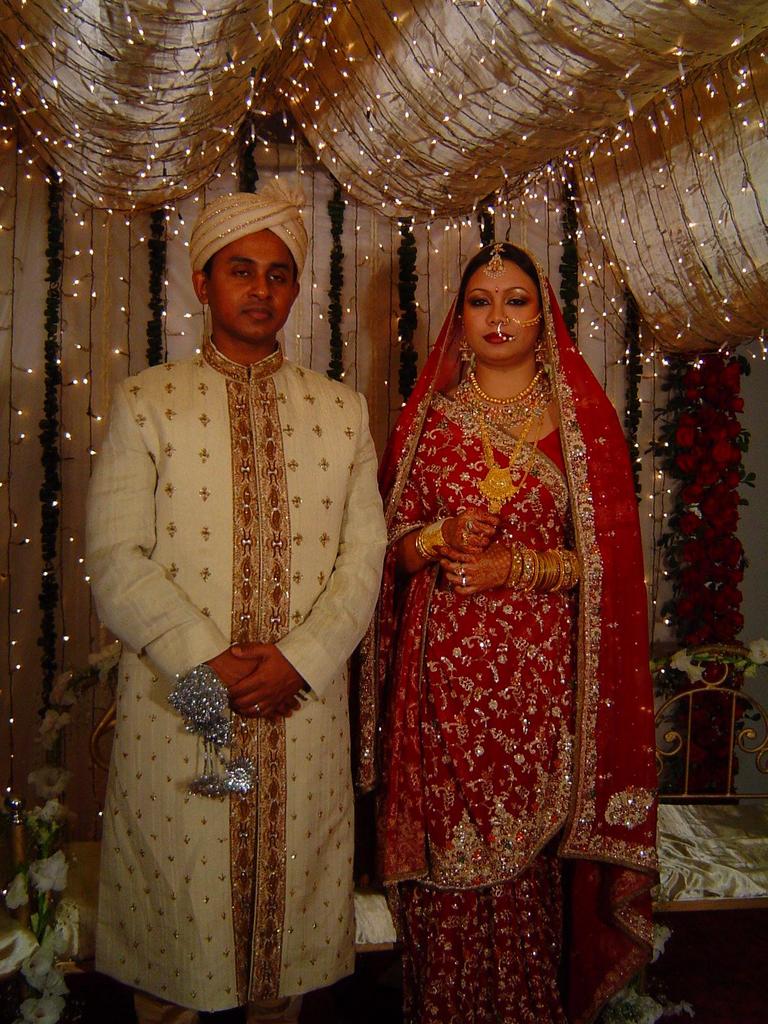
Jahed's Marriage & SHE.


Ershad & SHE.


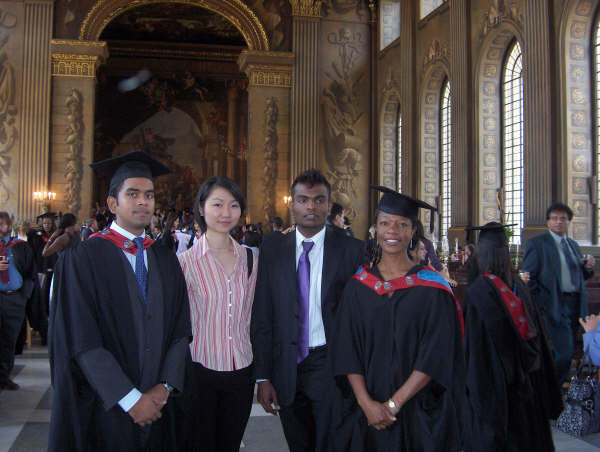
Convocation 1


Biswa's Lover.


Russel's Marriage and SHE.


Shova and HE.


Ahsan & His Friends (UK)

August 23, 2005

My Efforts...


The story of my website <www.khokonz.tk> starts some time in the middle of June 2003. When I decided to do something for my classmates, friends, and myself. After the final exam of BBA Program of Dhaka University, I have worked for World Bank and USAID Projects. I have realized that I am loosing communication to my classmates, friends day by day.

When I started MBA Program in July 2003 at Dhaka University, I have come to know that some of my classmates, friends are living abroad (USA, UK, Canada, Sweden, Japan, Australia) for higher studies. I decided to use Phones and Emails for communication.

As I am writing poems and short stories from my college life, some newspapers and magazines publishes that & my friends are always encourages time to time. So, I feel encourage to begin my website to integrate my classmates, friends forever.

As a self-learner, I have learned how to make a website by Front Page, HTML, Photoshop, Illustrator, Flash, Fireworks, Dream-weaver etc. I have passed many times by searching free stuff’s at Google, Yahoo and Microsoft. It was in the September of 2003 that I finally launched my websites by Free Hosting Site at <www.khokonz.4t.com>.

Finding the information regarding friends was an arduous task. Someone doesn't have Email ID, Phones etc, someone doesn't know how to use PC and NET etc. However, the journey continued.

Somewhere, in the beginning of the year 2005, I have decided to start Group Email at <4batch_finance_banking@googlegroups.com> for better integration. Less then 2 months, my all Group members (Finance and Banking Dept.) were shown tremendous responses.

It was sometime in February 2005 that I came up with the idea of coordinating the entire Friendships database and bringing it into one platform. It can be the perfect sense!

My mission was to represent the entire classmates (4th Batch, Finance & Banking Dept. DU) in one common platform accessible from all over the world. It's primary objectives are: Contact Phones, Email IDs, Pictures, Career Profiles and Recent News.

Importantly, when I come to know that my classmates, friends are getting right information at the right time around the world. I just feel happy.

Let the Friendship go on and on…

Khorshed Khokon, MBA

August 17, 2005

America's World Role

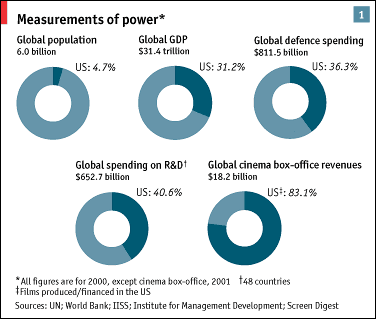
America now leads the world in all dimensions of power—military, economic, cultural, scientific (see chart 1)—by a margin out of all proportion to its population.


Look how they (American) seek to reshape the world. They have defined their war as one of good against evil, of civilization against terror, but have then butted their heads against the blood-stained brick wall that is the Israeli-Palestinian conflict. They have spoken about a “regime change” in Iraq, but have done little about it. They have said they favor democracy, but then hesitated to condemn an attempted coup in April against Venezuela's President Hugo Chavez. They have said they favor free trade, but then slapped tariffs on steel imports and subsidies on farming. They have rubbished foreign aid, then embraced it; supported a bankruptcy procedure for countries in financial crisis, then opposed it.

Bangladesh and PRSP


The general goal of the PRSP is to reduce poverty in phases so much so that by 2015 this global social scourge may be cut by half. This is also the grand aim of the UN as articulated through its Millennium Development Goals (MDGs). The global financial institution like the World Bank (WB), which is a major provider of development assistance to the developing economies and the LDCs, does also emphasize poverty reduction and hence preparation of the PRSP as a condition for receiving its development assistance. Which in other words means that the international donors, both bilateral and multilateral, have shifted significantly from their earlier focus on growth and development.

The failure of the previous model of development has forced the international donor community to rethink its strategy for development in the Third World. As a result, the issue of addressing poverty separately as a precondition for development and growth has now returned to center stage in development thinking. Hence the necessity of preparing the PRSP by countries like Bangladesh, still depending on donor assistance to plan their national budgets and implement their development activities.

The lead consultant of the anti-poverty document, however, has assured the nation that the PRSP has taken into account the real situation in the country as well as the problems of the ultra poor, urban poor, rights of the indigenous people, land and technology as required by the donors. The question of addressing the unique conditions of poverty in the Bangladesh society is pertinent to any poverty-reduction strategy in the local context, as the country has its own history of poverty. People's lack of access to social and state resources, poor governance, lack of transparency and accountability and pervasive corruption in the administration have their deleterious impact on the prospect for development in Bangladesh. Poverty is therefore directly related to these negative factors prejudicing the country's development efforts.

In this context, the whole gamut of development issues merits a very careful consideration at the time of finalizing the PRSP in order to map out a poor-friendly development path for Bangladesh.

August 10, 2005

Dr. APJ Abdul Kalam's speech...


I have THREE visions for India. In 3000 years of our history people from all over the world have come and invaded us, captured our lands, conquered our minds. From Alexander onwards, the Greeks, the Turks, the Moguls, the Portuguese, the British, the French, the Dutch, all of them came and looted us, took over what was ours. Yet we have not done this to any other nation.

We have not conquered anyone. We have not grabbed their land, their culture, and their history and tried to enforce our way of life on them. Why? Because we respect the freedom of others, that is why my FIRST vision is that of FREEDOM. I believe that India got its first vision of this in 1857, when we started the war of independence. It is this freedom that we must protect and nurture and build on. If we are not free, no one will respect us.

My SECOND vision for India is DEVELOPMENT. For fifty years we have been a developing nation. It is time we see ourselves as a developed nation. We are among top 5 nations of the world in terms of GDP. We have 10 percent growth rate in most areas. Our poverty levels are falling. Our achievements are being globally recognized today. Yet we lack the self-confidence to see ourselves as a developed nation, self-reliant and self-assured. Isn’t this incorrect?

I have a THIRD vision; India must stand up to the world. Because I believe that unless India stands up to the world, no one will respect us. Only strength respects strength. We must be strong not only as a military power but also as an economic power. Both must go hand-in-hand. My good fortune was to have worked with three great minds. Dr. Vikram Sarabhai of the Department of space, Professor Satish Dhawan, who succeeded him and Dr. Brahm Prakash father of nuclear material. I was lucky to have worked with all three of them closely and consider this the great opportunity of my life.

Why is the media here so negative? Why are we in India so embarrassed to recognize our own strengths, our achievements? Why are we in India so embarrassed to recognize our own strengths, our achievements? We are such a great nation. We have so many amazing success stories but we refuse to acknowledge them. Why? We are the first in milk production. We are number one in Remote sensing satellites. We are the second largest producer of wheat. We are the second largest producer of rice. Look at Dr. Sudarshan; he has transferred the tribal village into a self-sustaining, self-driving unit. There are millions of such achievements but our media is only obsessed in the bad news and failures and disasters.

I was in Tel Aviv once and I was reading the Israeli newspaper. It was this day after a lot of attacks and bombardments and deaths had taken place. The Hamas had struck. But the front page of the newspaper had the picture of a Jewish gentleman who in five years had transformed his desert and into an orchid and a granary. It was the inspiring picture that everyone woke up to. The gory details of killings, bombardments, deaths, were inside in the newspaper, buried among other news. In India we only read about death, sickness, terrorism, crime. Why are we so NEGATIVE?

I was in Hyderabad giving this lecture, when a 14-year-old girl asked me for my autograph. I asked her what her goal in life is: she replied: I want to live in a developed India. For her, you and I will have to build this developed India. You must proclaim.

India is not an under-developed nation; it is a highly developed nation. Allow me to come back with vengeance. Got 10 minutes for your country? YOU say that out Government is inefficient. YOU say that our laws are too old. YOU say that the municipality does not pick up the garbage. YOU say that the phones don’t work, the railways are a joke, the airline is the worst in the world, and mails never reach their destination. YOU say that our country has been fed to the dogs and is the absolute pits. YOU say, say and say. What do YOU do about it?

Take a person on his way to Singapore. Give Him a name? YOURS. Give him a face? YOURS. YOU walk out of the airport and you are at your international best.

In Singapore you don’t throw cigarette butts on the roads or eat in the stores. YOU are as proud of their Underground Links as they are. You pay $5 (approx.Rs.225/-) to drive through Orchard Road (equivalent of Mahim Causeway or Pedder Road) between 5 PM and 8 PM. YOU comeback to the parking lot to punch your parking ticket if you have over stayed in a restaurant or a shopping mall irrespective of your status identity.

In Singapore you don’t say anything, DO YOU? YOU wouldn’t dare to eat in public during Ramadan, in Dubai. YOU would not dare to go out without your head covered in Jeddah. YOU would not dare to buy an employee of the telephone exchange in London at 10 pounds (Rs.900/-) a month to, “see to it that my STD and ISD calls are billed to someone else. “YOU would not dare to speed beyond 55 mph (88 kmph) in Washington and then tell the traffic cop, “Jaanta Hai sala main kaun hoon (do you know who I am?). I am so and so’s son. Take your two bucks and get lost.

YOU wouldn’t chuck an empty coconut shell anywhere other than the garbage pail on the beaches in Australia and New Zealand. Why don’t YOU spit Paan on the streets of Tokyo? Why don’t YOU use examination jockeys or buy fake certificates in Boston? We are still talking of the same YOU. YOU who can respect and conform to a foreign system in other countries but cannot in your own. You who will throw papers and cigarettes on the road the moment you touch Indian ground.

If you can be an involved and appreciative citizen in an alien country why cannot you be the same here in India?

Once in an interview, the famous Ex-municipal commissioner of Bombay Mr. Tinaikar had a point to make. “Rich people’s dogs are walked on the streets to leave their affluent droppings all over the place,” he said. “And then the same people turn around to criticize and blame the authorities for inefficiency and dirty pavements. What do they expect the officers to do? Go down with a broom every time their dog feels the pressure in his bowels?

In America every dog owner has to clean up after his pet has done the job. Same in Japan. Will the Indian citizen do that here? He’s right. We go to the polls to choose a government and after that forfeit all responsibility.

We sit back wanting to be pampered and expect the government to do everything for us whilst our contribution is totally negative. We expect the government to clean up but we are not going to stop chucking garbage all over the place nor are we going to stop to pick up a stray piece of paper and throw it in the bin. We expect the railways to provide clean bathrooms but we are not going to learn the proper use of bathrooms. We want Indian Airlines and Air India to provide the best of food and toiletries but we are not going to stop pilfering at the least opportunity.

This applies even to the staff who is known not to pass on the service to the public. When it comes to burning social issues like those related to women, dowry, girl child and others, we make loud drawing room protestations and continue to do the reverse at home. Our excuse?” It’s the whole system, which has to change, how will it matter if I alone forego my son’s rights to a dowry. “So who’s going to change the system? What does a system consist of? Very conveniently for us it consists of our neighbors, other households, other cities, other communities and the government. But definitely not me and YOU.

When it comes to us actually making a positive contribution to The system we lock ourselves along with our families into a safe cocoon and look into the distance at countries far away and wait for a Mr. Clean to come along & work miracles for us with a majestic sweep of his hand. Or we leave the country and run away. Like lazy cowards hounded by our fears we run to America to bask in their glory and praise their system. When New York becomes insecure we run to England.

When England experience unemployment, we take the next flight out to the Gulf. When the Gulf is war struck, we demand to be rescued and brought home by the Indian government. Everybody is out to abuse and rape the country. Nobody thinks of feeding the system. Our conscience is mortgaged to money.

Dear Indians, The article is highly thought inductive, calls for a Great deal of introspection and pricks one’s conscience too. J.F. Kennedy’s words to his fellow Americans to relate to Indians?...

“Ask what we can do for India and do what has to be done to make India what America and other western countries are today”
August 09, 2005

Royals cost Britain £37m in 2004

The Royal Family cost Britons £36.7m last year, equivalent to 61p per taxpayer. Buckingham Palace said the figure, which excludes security costs, was at its lowest since 2001 and had fallen 2.3% in real terms since 2003-4.

August 01, 2005

ISO 9000 Certificates

President of Federation of Bangladesh Chambers of Commerce and Industries (FBCCI) Abdul Awal Mintoo recently said around 600 Bangladeshi companies have so far been certified by ISO 9000, a global standard for maintaining Quality Management System (QMS). But the number is growing quite slowly because most of the companies in Bangladesh are not completely aware of what ISO 9000 stands for.

July 31, 2005

Lyrics: Shania Twain

From This Moment On

“I do swear that I’ll always be there. I’d give anything and everything and I will always care. Through weakness and strength, happiness and sorrow, for better, for worse, I will love you with every beat of my heart”


From this moment life has begun
From this moment you are the one
Right beside you

Is where I belong
From this moment on

From this moment
I have been blessed
I live only for your happiness
And for your loveI’d give my last breath
From this moment on

I’d give my hand to you with all my heart
Can’t wait to live my life with you, can’t wait to start
You and I will never be apart
My dreams came true because of you
From this moment

As long as I liveI will love you,
I promise you this
There is nothing I wouldn’t give
From this moment on

You’re the reason I believe in love
And you’re the answer to my prayers from up above
All we need is just the two of us
My dreams came true because of you


July 28, 2005

Bluetooth Technology

It was in 1994 when Ericsson Inc. first invented this technology called Bluetooth named after Danish king Harald Bluetooth, who was successful to adjoin Norway and Denmark right in the manner technologies are being integrated today. But it wasn't until the year 2000 that Bluetooth became widely popular among devices.

Bluetooth transfers data at a rate of 721 Kbps, which is 3 times the average speed of parallel ports and 8 times the average speed of serial ports. This bandwidth is capable of transmitting voice, data, video and still images. Unlike IrDA (Infrared Data Association), Bluetooth frequency ranges quite a distance from a metre to 100 metres even at blockades.

Adamjee EPZ

Adamjee Jute Mills in Narayanganj, founded in 1957, was closed down in June 2002, after the nationalised industry had incurred a huge Tk 13 billion loss accumulated since the independence.

The AEPZ to be set up on the mills' 295 acre land will comprise 200 industrial plots. It eyes a $500 million export a year and is expected to create some 100,000 jobs. Investments to the tune of $250 million for 70 industrial units have already been proposed.

July 26, 2005

Apologies...

Positive world for the positive human being, Check out the list of great apologies of the world:

  • The second largest US bank JP Morgan Chase & Co. has publicly disclosed that two of its predecessor banks had received thousands of slaves as collateral prior to the Civil War. It offered a formal letter of apology and said it was creating a 5 million dollar scholarship fund for the African-American students from Louisiana.
  • Japanese apologised for the cruelty committed by its troops in the Far East during World War II.
  • Germany apologised for the suffering caused by its actions toward Jews and others.
  • Pope John Paul II apologised for the past sins of the Roman Catholic Church against non-Catholics.
  • Australia apologised for its mistreatment of the country's aborigine population.

July 25, 2005

Travelling...

I am travelling inside my mind, which is running inside the globe that is spinning around the sun. Everything about life is relative, yesterday, today and tomorrow, everything depending on time and motion, everything having its rightful place in the stream of events from birth to death.

July 21, 2005

Did you know....

  • Those who appear to be very strong in heart, are real weak and most susceptible?
  • Those who spend their time protecting others are the ones that really need someone to protect them?
  • The 3 most difficult things to say are : I love you, Sorry and Help me?
  • When you help someone, the help is returned in two-folds?
  • It's easier to say what you feel in writing than saying it to someone in the face? But did you know that it has more value when you say it to their face?
  • If you ask something in faith, your wishes are granted?
  • You can make your dreams come true? If you ask for it by faith and if you really know, you'd be surprised by what you could do.

July 14, 2005

Monsoon 1


A village woman dips into the pond near her house for water. This is age-old practice in our rural area particularly in the monsoon seasons of Bangladesh.


Look at the human life and water of my village (Tangail, 1991). Fisherman are always interesting character in our rural life. Wide looking area with monsoon light is the art of my country, Bangladesh.

June 20, 2005

Trivia 1

  • Two people can get married, but more people are needed in a divorce.
  • Anything is fair in love and war.
  • Late to remember and quick to forget.
  • Politics is a self-serving business in the name of the people.
  • He is like the fool who stays up all night trying to find out how he goes to sleep.
  • Life is either a dream or a nightmare. Superstition is when one is obsessed with either.

Confused on everything...

There was a time in my life (student life) when I could draw a line between opposites. Good was good and bad was bad. Innocent was innocent and guilty was guilty.

Then reality came to my world (professional life) and made me confused on everything. Now I can't tell the difference even between black and white.

Politics is the magic detergent that washes all stains, so that the same person returns like fresh laundry again and again. Get power, abuse it, step down and go clean.

Perhaps we have failed to audit our own behavior. Everyday we are swimming on calculator, trying to accomplish a life that is so-called professional standards.

The conflict of ideology


All ideological conflicts have claimed innocent lives in the name of larger interests. Check it out the list:

  • Mao Zhe Dong is responsible for over 30 million deaths in the name of communism in China.
  • Lenin sent 4 million and Stalin sent 20 million Russians to death over their struggle for communism.
  • Adolph Hitler's Nazi madness cost 35 million lives during the Second World War.
  • Pol Pot killed 2 million Cambodians and
  • Che Guevara ordered hundreds of people to execution under his watch.

Responsibilities…

What has been happening to us?

Everybody talks,
nobody listens.

Everybody seeks,
nobody finds.

Everybody looks,
nobody sees.

Everybody pretends,
nobody intends.

Everybody owns,
nobody shares.

Everybody commits,
nobody cares.

A Successful Man...

A successful man is a conglomerate story. He wants to become many in one. He is a business magnate, director of many companies, owner of a university, owner of a restaurant, and owner of a clinic. He wants everything money can buy including talent and dignity, proving that not only had he triumphed over poverty but also achieved a position in life to dispense what he could not get when he was growing up.

Corruption, chaos and conflict...

We have got more chiefs than Indians, more leaders than followers, more singers than listeners, more newspapers than readers, more banks than customers, more TV channels than time to watch, and more mouths than words.

Everyone is thinking, everyone is writing, singing, talking and initiating, yet we are not moving.

May 20, 2005

Poetry 1

Passion

I wish you bluebirds in the spring
To give your heart a song to sing
And then a kiss, but more than this
I wish you love
And in July, a lemonade
To cool you in some leafy glade
I wish you health, and more than wealth
I wish you love
My breaking heart and I agree
That you and I could never be
So with my best, my very best
I set you free I wish you shelter from the storm
A cozy fire to keep you
But most of all, when snowflakes fall

End of Time

Suddenly the world seems such a perfect place.

Suddenly it moves with such a perfect grace.
And there's no mountain too high, no river too wide.
Storm clouds may gather, and storms may collide
But I love you until the end of time.

Words

Words that hurt
Or do they heal

Words are mean
But do they ring true

Words untamed
Flying though the air

Words are useless
They prove nothing

Words free hostility
While emission poison

Words can kill
Heart will never recover

May 05, 2005

Poetry 2

At Last

Cherish your vision;
Cherish your ideals,
Cherish the music that stirs in your heart,
The beauty that forms in your mind,
The loveliness that drapes your purest thoughts.
If you remain true to them, your world will be built at last.

Inspiration

People are often unreasonable, illogical and self-centered.

Forgive them anyway.

If you are kind, people may accuse you of selfish, ulterior motives.
Be kind anyway.

If you are successful, you will win some false friends and some true enemies.
Succeed anyway.

If you are honest and frank, people may cheat you.
Be honest and frank anyway.

What you spend years building, someone may destroy overnight.
Build anyway.

If you find serenity and happiness, they may be jealous.
Be happy anyway.

The good you do today, people will often forget tomorrow.
Do good anyway.