Passion
I wish you bluebirds in the spring
To give your heart a song to sing
And then a kiss, but more than this
I wish you love
And in July, a lemonade
To cool you in some leafy glade
I wish you health, and more than wealth
I wish you love
My breaking heart and I agree
That you and I could never be
So with my best, my very best
I set you free I wish you shelter from the storm
A cozy fire to keep you
But most of all, when snowflakes fall
End of Time
Suddenly the world seems such a perfect place.
Suddenly it moves with such a perfect grace.
And there's no mountain too high, no river too wide.
Storm clouds may gather, and storms may collide
But I love you until the end of time.
Words
Words that hurt
Or do they heal
Words are mean
But do they ring true
Words untamed
Flying though the air
Words are useless
They prove nothing
Words free hostility
While emission poison
Words can kill
Heart will never recover
May 20, 2005

May 05, 2005
Poetry 2
At Last
Cherish your vision;
Cherish your ideals,
Cherish the music that stirs in your heart,
The beauty that forms in your mind,
The loveliness that drapes your purest thoughts.
If you remain true to them, your world will be built at last.
Inspiration
People are often unreasonable, illogical and self-centered.
Forgive them anyway.
If you are kind, people may accuse you of selfish, ulterior motives.
Be kind anyway.
If you are successful, you will win some false friends and some true enemies.
Succeed anyway.
If you are honest and frank, people may cheat you.
Be honest and frank anyway.
What you spend years building, someone may destroy overnight.
Build anyway.
If you find serenity and happiness, they may be jealous.
Be happy anyway.
The good you do today, people will often forget tomorrow.
Do good anyway.
Cherish your vision;
Cherish your ideals,
Cherish the music that stirs in your heart,
The beauty that forms in your mind,
The loveliness that drapes your purest thoughts.
If you remain true to them, your world will be built at last.
Inspiration
People are often unreasonable, illogical and self-centered.
Forgive them anyway.
If you are kind, people may accuse you of selfish, ulterior motives.
Be kind anyway.
If you are successful, you will win some false friends and some true enemies.
Succeed anyway.
If you are honest and frank, people may cheat you.
Be honest and frank anyway.
What you spend years building, someone may destroy overnight.
Build anyway.
If you find serenity and happiness, they may be jealous.
Be happy anyway.
The good you do today, people will often forget tomorrow.
Do good anyway.
April 30, 2005


April 19, 2005
USAID Tour...
USAID Project Tour 2003

I am at Ramu, Cox's Bazar

From left to right Hafiz, Khokon (Me), Polash, Masum, Afroz and Laila at Sylhet Tea Garden

I am at Badhaghat, Sunamganj
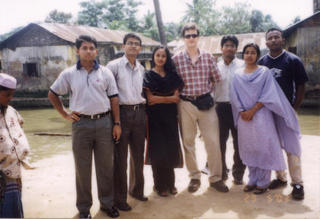
From left to right Hafiz, Khokon (Me), Laila, Eric (Our Boss), Polash, Afroz and Masum
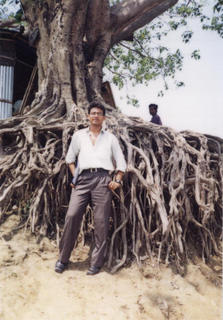
I am at Sunamganj
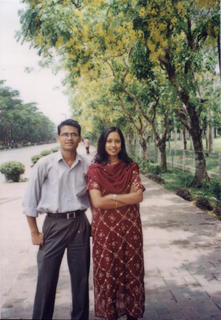
Laila with me at National Parliament of Bangladesh

I am at National Parliament of Bangladesh

From left to right Khokon (Me), Hafiz, Laila, Polash, Masum and Afroz at Karamjal, Sundarban

From left to right Afroz, Laila and Khokon (Me) at Karamjal, Sundarban
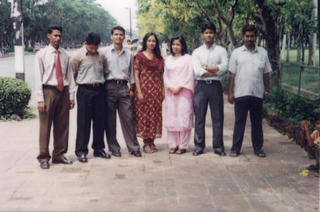
From left to right Abed, Hafiz, Khokon (Me), Laila, Afroz, Polash and Chhunu Mama (Driver) at National Parliament of Bangladesh
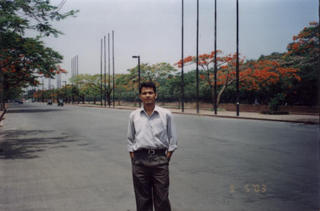
I am at National Parliament of Bangladesh
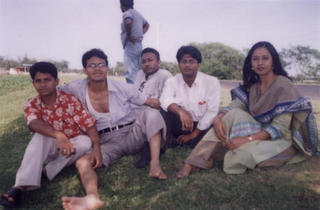
From left to right Hafiz, Khokon (Me), Masum, Poalsh and Laila at Sylhet-Sunamganj Highways
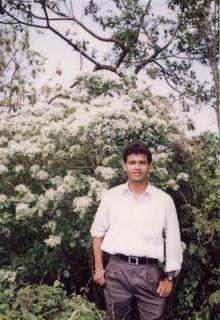
I am at Gowainghat, Sylhet

I am at Madhabkunda Water Falls, Moulvibazar
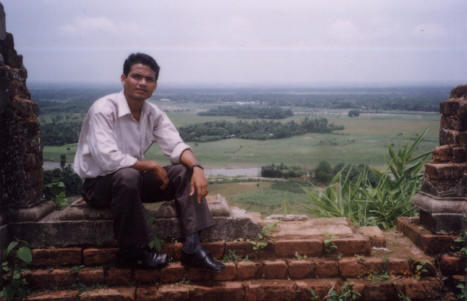
I am at Ramu, Cox's Bazar

From left to right Hafiz, Khokon (Me), Polash, Masum, Afroz and Laila at Sylhet Tea Garden
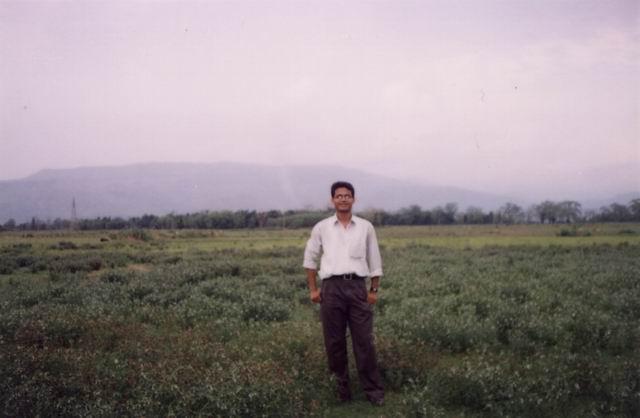
I am at Badhaghat, Sunamganj

From left to right Hafiz, Khokon (Me), Laila, Eric (Our Boss), Polash, Afroz and Masum
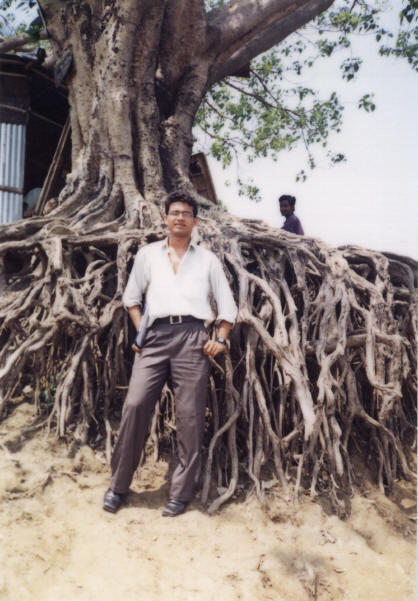
I am at Sunamganj

Laila with me at National Parliament of Bangladesh
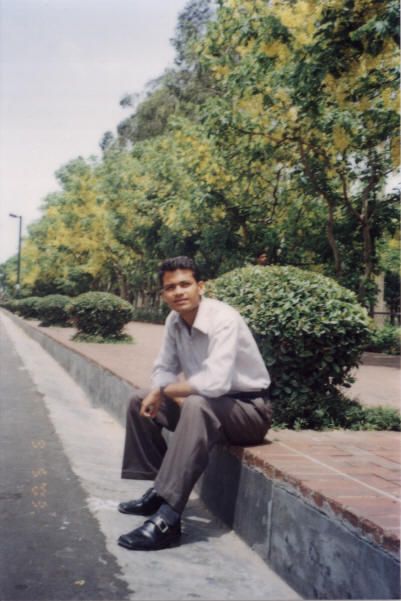
I am at National Parliament of Bangladesh

From left to right Khokon (Me), Hafiz, Laila, Polash, Masum and Afroz at Karamjal, Sundarban

From left to right Afroz, Laila and Khokon (Me) at Karamjal, Sundarban
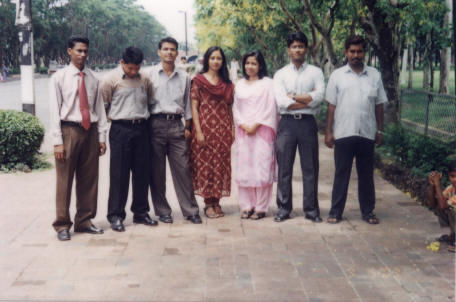
From left to right Abed, Hafiz, Khokon (Me), Laila, Afroz, Polash and Chhunu Mama (Driver) at National Parliament of Bangladesh

I am at National Parliament of Bangladesh

From left to right Hafiz, Khokon (Me), Masum, Poalsh and Laila at Sylhet-Sunamganj Highways

I am at Gowainghat, Sylhet
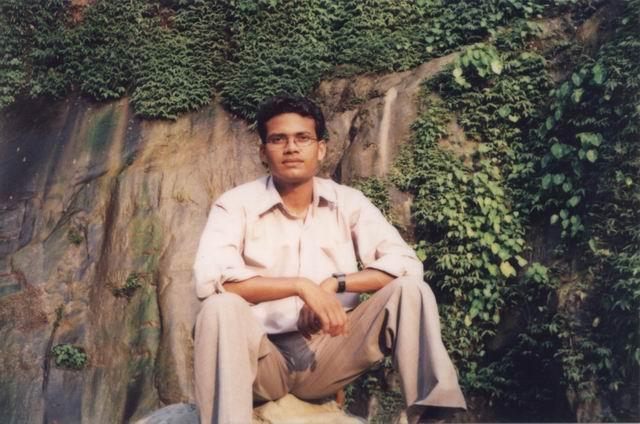
I am at Madhabkunda Water Falls, Moulvibazar

I am at Madhabkunda Water Falls, Moulvibazar

From left to right Masum, Laila, Khokon (Me), Polash, Afroz and Hafiz at Satgambuj Mosque, Bagerhat

Abed, Polash and Khokon (Me) at Sunamganj-Badhaghat Road

Khokon (Me) and Laila at Gowainghat, Sylhet

I am at Kaptai, Rangamati
World Bank Tour...
World Bank Tour 2003

I am at Chandpur Tea Garden Banglow, Sunamganj

I am at Jaflong, Sylhet

I am at Jaflong, Sylhet

I am at Parjatan Motel, Sylhet
April 16, 2005
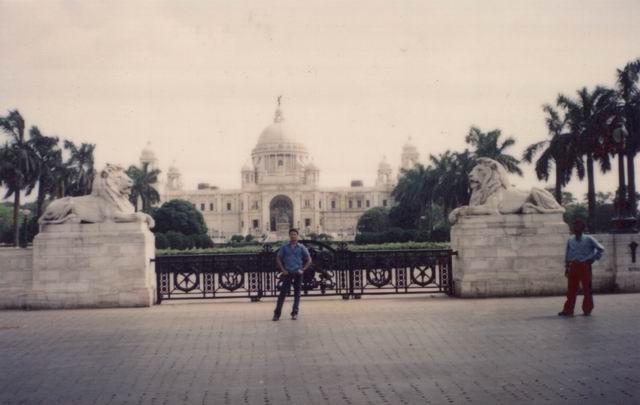
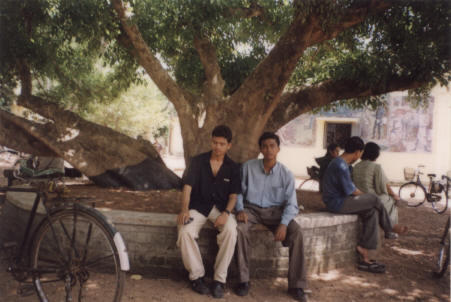
India Tour...

April 15, 2005
My Village...
My Village at Tangail, Bangladesh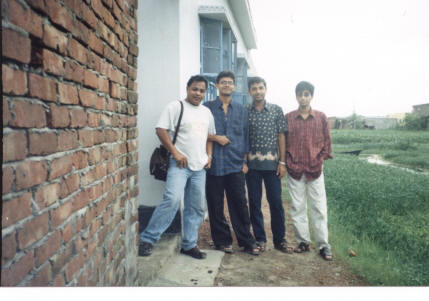

My Village, Tangail 1997
April 14, 2005
Class Friends...
Friends (4th Batch Finance & Banking)
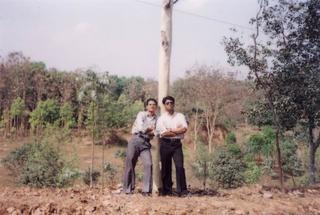
From left to right Khokon (Me) and Polash at BARD, Comilla, DU Picnic 1998
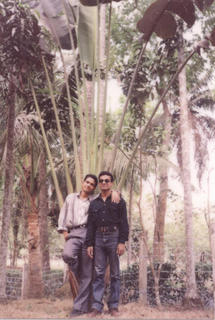
From left to right Khokon (Me) and Sohel at BARD, Comilla, DU Picnic 1998
From left to right all class mate at Shafipur Ansar Academy, Gazipur, DU Picnic 2000


From left to right Khokon (Me) and Polash at BARD, Comilla, DU Picnic 1998
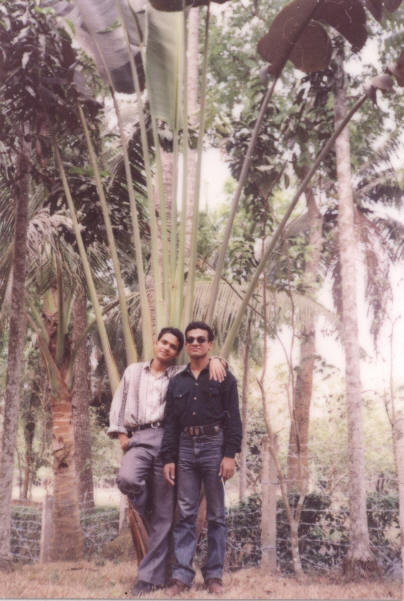
From left to right Khokon (Me) and Sohel at BARD, Comilla, DU Picnic 1998

From left to right all class mate at Shafipur Ansar Academy, Gazipur, DU Picnic 2000

From left to right all class mate at Shafipur Ansar Academy, Gazipur, DU Picnic 2000

From left to right all class mate at Shafipur Ansar Academy, Gazipur, DU Picnic 2000
March 17, 2005
Bangladesh: Banking

Financial sector of Bangladesh, like most developing countries, is dominated by banking enterprises. Banks at early stages of history of Bangladesh were nationalized and there was mismatch between assets and liabilities. The central bank of the country had limited tools to manage monetary policy. Direct tools namely determination of SLR/CRR, administered interest rate policy and moral suasion were the man instruments of monetary policy. Most banks pursued a policy of financial deepening through extending bank branches to the remote and rural areas without considering financial viability. In this situation, causality between economic growth and performance of the financial sector could not be established.
There was a major policy shift in the early 1980s when private sectors banks were allowed in the country. In addition to the existing 19 public sector and foreign banks, 10 new private banks opened their business during early 1980s. Thereafter, another 7 and 13 banks started commercial banking in the country during mid-1990s and early 2000s respectively. The sector embarked upon a Financial Sector Reform Program in the 1990s which primarily aimed at entrusting additional powers to the central bank by strengthening efficacy of its instruments. Interest rates were liberalized; open market operation was activated by introducing new bills. Attempts were made to improve governance in the financial sector. The pace of reform slowed down during the second half of 1990s, but picked up speed from the early part of the current decade.
Currently, the banking sector comprises of 4 nationalized commercial banks (NCBs), 5 government-owned specialized banks (SBs) dealing with development finance in specialized sectors, 30 private commercial banks (PCBs) and 10 foreign commercial banks (FCBs). The structure of the banking system has changed substantially over the last few years. NCBs’ role has gone down. Their share in total assets went down from 54 percent in 1998 to 40 percent in 2004. On the other hand, PCBs’ share went up from 27 percent in 1998 to 43 percent in 2004. The change reflects adoption and implementation of new policies for the banking sector.
.
Banking sector’s Regulatory reforms:
(a) Governance structure of banks has been strengthened; better disclosure and transparency standards have been introduced and dissemination to the public at large has been mandated;
(b) Some restrictions have been imposed on the composition and tenure of the bank Directors. The maximum number of Directors in a bank has been limited to 13;
(c) Bangladesh Bank's capacities to supervise and regulate banks effectively, monitor non-performing loans, enforce actions against banks found violating regulations and laws have been strengthened;
(d) Audit Committees were mandated for all banks with clear guidelines and TORs. Banks have been asked to strengthen their internal control system;
(e) The Bangladesh Bank recently introduced Early Warning System (EWS);
(f) Government borrowing from the banking system is now market based and the annual volume of borrowing is limited, allowing greater room for the private sector. Private sector credit grew at over 14 percent during the last fiscal year.
(a) Governance structure of banks has been strengthened; better disclosure and transparency standards have been introduced and dissemination to the public at large has been mandated;
(b) Some restrictions have been imposed on the composition and tenure of the bank Directors. The maximum number of Directors in a bank has been limited to 13;
(c) Bangladesh Bank's capacities to supervise and regulate banks effectively, monitor non-performing loans, enforce actions against banks found violating regulations and laws have been strengthened;
(d) Audit Committees were mandated for all banks with clear guidelines and TORs. Banks have been asked to strengthen their internal control system;
(e) The Bangladesh Bank recently introduced Early Warning System (EWS);
(f) Government borrowing from the banking system is now market based and the annual volume of borrowing is limited, allowing greater room for the private sector. Private sector credit grew at over 14 percent during the last fiscal year.
Core Risk Management Guidelines on five major risks e.g. credit risk management, foreign exchange risk management, asset-liability risk management, internal control and compliance, and anti-money laundering have been issued by the Bangladesh Bank. Stringent loan rescheduling conditions have been introduced to stop ever greening of loans. Financial instruments of varying tenure such as repo and reverse repo, and five-year and ten-year Government Investment Bonds have been introduced. Efforts are continued to develop the government and corporate bond market and the functioning of the primary dealership. The BB and the Securities and Exchange Commission agreed to allow the government bonds to be traded in the stock exchange. BB, SEC and NBR have developed an enabling legal, regulatory framework for bonds/ securitization of receivables. The interest rates have become flexible and now show a declining trend. Introduction of repurchase agreement and reverse repurchase agreement, strict limit on government borrowing from banks, reduction in SLR and reduction in yield on T-bills have contributed to this downward flexibility.
Beginning 2001-02, some Acts were either amended or enacted to revitalize the financial sector. Money Laundering Prevention Act, 2002 gave BB responsibility for prevention of money laundering offences. Banks Nationalization Order was amended in 2003. Among others, the amendment requires disclosure of financial statements to the Board and the BB and gives BB greater say in the appointment and removal of MDs. Bank Company (Amendment) Act 2003, helped the BB to raise capital requirement of the banks to Tk. 1 billion. Financial Loan Court Act 2003 provided the authority to set up special courts dealing exclusively with default loans. It has prescribed time limits for courts to give judgment on original and appeal suits; mandated banks to sell collaterized security before filing cases; and provided alternative dispute resolution mechanism.
Banking sector’s Institutional reforms:
As a central bank, the Bangladesh Bank is mandated to promote the operation of a stable and sound financial system. Bangladesh Bank also is mandated to conduct the monetary policy to ensure price stability and support growth. The Bangladesh Bank Strengthening Program includes
(a) Computerization of the operations of the Bangladesh Bank,
(b) Human resource development through reforms of recruitment, promotion and compensation policies,
(c) Restructuring the different departments,
(d) Reengineering the business processes,
(e) Automation of the Clearing House,
(f) Capacity building in the core activities i.e. monetary policy, regulation of the financial sector, and research and policy analysis. The goal is to transform the decades-old traditional and manual system to a modern, automated system.
The improvement in capacity will enable the Bangladesh Bank to perform its roles effectively and assert its independence, while winning the respect of the stakeholders.
Impact of Reform:
.
Following restructuring initiatives, financial sector further deepened as measured by M2/GDP ratio. The ratio, which stood at 28 percent in FY 1996, went up to 39 percent in FY 2004. Two other indicators namely, total credit to GDP ratio and private credit to GDP ratios show similar trend.
The impact of the reform can also be realized by analyzing the developments in the CAMEL framework, which considers Capital Adequacy, Asset Quality, Management Soundness, Earnings and Liquidity. Capital Adequacy: The BB raised minimum capital requirement on risk-weighted basis, as per Basle standard, from 8% to 9% in 2002. Minimum capital requirement of banks was raised to Tk. 1000 million ($17 million) from Tk. 400 million in 2003. The minimum capital requirement of Non-Bank Financial Institutions (NBFIs) was also raised from Tk. 50 million to Tk. 100 million in 2001 and further to Tk. 250 million from June 2003.
Many banks have floated their shares in capital market to achieve the target of capital adequacy. Most banks, other than NCBs, are now well capitalized. PCBs’ capital adequacy ratio has increased from 9.9 percent in December 2001 to 10.3 percent in December 2004. Private banks are now listed in the capital market which helped revive the capital market. In total market capitalization, the share of banks rose from 10% in June 1998 to 47% in December 2004;
The reasons for increasing the minimum capital requirement are not often clearly understood. Firstly, the higher is the net worth of a bank in relation to deposits, the more likely it is that it will be able to weather any shock, including bank collapse. Equally importantly, the size of the equity is a measure of what stakes the owner-directors have in seeing that the banks are run profitably. The higher the stakes, the less will be the temptation to do things to the detriment of the bank’s interest.
Asset Quality: Asset quality remained poor all through the history of Bangladesh. However, there have been significant improvements in recent years. Much of the problem is a manifestation of corruption, politics of public ownership, weak banking management, poor staffing quality, inadequate regulation and weak supervision. Actions taken over the last 3 years described earlier have led to significant improvements, which include improvement in NPL position.
Non-Performing Loan:
Ratio Management Soundness: Though it is difficult to measure management soundness, attempt may be made by using different ratios such as total expenditure to total income, operating expenses to total expenses, earnings and operating expenses per employee, and interest rate spread. In particular, a high and increasing expenditure to income ratio indicates the operating inefficiencies that could be due to weaknesses in management.
Expenditure to income ratio of the banking sector has improved from 99.9 percent in 2000 to 93.9 percent in 2003.
Earnings: Earning and profitability of the banking sector have also improved in recent years as measured by return on assets (ROA) and return on equity (ROE). ROA improved from 0.01 percent in 2000 to 0.7 percent in 2004 and ROE improved from 0.3 percent to 13.0 percent during the same period. Although the net interest income of the NCBs has been negative since 2000, the overall banking industry experienced a consistent upward trend. The performance of private banks is significantly better than that of public ones. It is also notable, however, that some improvement of NCBs has happened only recently.
Liquidity: Presently, commercial banks are required to hold 16 percent of their total deposits as statutory liquidity requirement (SLR) which includes a 4.5 percent cash reserve requirement (CRR). Liquidity indicators measured as percentage of demand and time liabilities (excluding inter bank items) of the banks indicate that all the banks maintained excess liquidity over the minimum requirement. However, foreign private banks maintained higher levels of liquidity than domestic banks. In 2004 excess liquidity has gone down to 8.7 percent from the level of 9.9 percent last year.
Excess Liquidity Ratio:
From a poorly performing sector owing to lack of competition, weak governance, public ownership and inefficient management, the banking industry is, after the recent reform initiatives taken, poised for rapid development. Good progress has been made in deregulating interest rate, functioning of the floating exchange system, strengthening prudential regulations, enhancing the capacity of the central bank, introducing new monetary instruments, strengthening legal environment and reforming nationalized commercial banks. Private commercial banks have now greater share in assets, credit and deposits.
Conclusion:
While a lot has been achieved during the past three years, it is needed to continue to move forward with additional measures to widen and deepen reforms. As the demand for loans in the traditional areas becomes more and more limited, the BB is encouraging banks to find new areas of lending; areas including agriculture and agro based industries, small enterprises, housing and consumers’ credit. As regards of loans to small business, Bangladesh Bank has established a Tk. 1 billion refinancing facility under which participating financial institutions can get refinancing at the bank rate i.e. five percent, for loans between Tk. 0.2 million and Tk. 5.0 million disbursed to enterprises anywhere in Bangladesh, as either term loan or working capital. The IDA has approved a contribution of $10 million and the ADB is finalizing a proposal to contribute $30 million to the Bangladesh Bank's Refinancing Facility. Bangladesh Bank has also a refinancing facility for agro-based industries of larger sizes located in rural areas.
The other important challenge that the banking sector is facing, is introduction of information technology in the banking system in an aggressive manner. This is required to improve management efficiency, reduce operational cost, improve customer services, and increase transparency. The BB would continue the journey on the path it has chosen.
>> Source: Financial sector reform in Bangladesh: Developments and challenges by Fakhruddin Ahmed, Former Governor, Bangladesh Bank.
February 01, 2005
Introduction
Khorshed Khokon was born in Tangail District, Bangladesh, in 1980 AD. He has got BBA and MBA from Finance & Banking Department at Dhaka University. He has worked for USAID (United States Agency for International Development) and World Bank (IBRD i.e. International Bank for Reconstruction and Development).
His first interest is reading and then writing. His area of concentration is Financial Economics and Contemporary Bengali Poetry. His several writings are already published by different newspapers, magazines. He is also interested in traveling; up to now he has traveled 50 districts out of 64 districts of Bangladesh. He has also traveled different places of India.
He is now working at Private Sector Commercial Bank at Dhaka. He is always positive to life. His first poetry book is coming soon...
Please Contact:
Khorshed Khokon, MBA
Email: khokonz@gmail.com
He is now working at Private Sector Commercial Bank at Dhaka. He is always positive to life. His first poetry book is coming soon...
Please Contact:
Khorshed Khokon, MBA
Email: khokonz@gmail.com
January 01, 2005
Friends

Name, Career and Phone of Friends (4th Batch, Finance & Banking)
Abed > Japan > 81-080-6806-6776, 81-050-1463-6335
Ahsan > UK > 079-4637-9081, 079-1564-4242
Ajopa > GP >
Alal > Omni Group > 712 0776
Any > United Leasing > 0171 803638
Apon > CityCell > 721 4654
Arif > Prime Finance > 0187 540870, 913 8605
Arif > Rajshahi > 0172 031721
Arpita > AIMS > 0176 622100
Azad > Trust Bank > 0191 575973
Azam > Unity Group > 0188 324408
Bappy > GP > 721 9115, 0171 909631
Bashir > Tech Valley > 011 045910
Bishwa > IDLC > 0172 513800
Bobby > Ericsson > 0171 378472
Chhanchal > 0191 264091
Dilip > GP > 0172 129002
Dipu > DSE > 0172 672517
Ershad > CityCell > 011 800250
Faisal > Dhaka Bank >
Ferdous > AAA Consultants > 0187 525252
Hafiz > LankaBangla Securities > 0171 702573
Harun > City College > 0172 012849
Ibrahim > 0176 369625
Iqbal > MIDAS Financing > 0189 201929
Jahed > Aktel > 720 0206
Jahangir > BCS Finance > 0191 587474
Jihan > GP > 0171 623273
Joty > Stamford University > 900 2203, 0189 927694
Kamrul (1) > Sheba Phone > 0176 777823
Kamrul (2) > Bank Asia > 0172 160751
Kanak > GSP Finance > 0172 584818
Kanta > GP > 0171 506662
Karim > City College > 0189 141238
Khokon > National Bank > 0189 286415
Lincon > Aktel > 0189 210846
Lipi > Trust Bank > 987 1005, 0172 175408
Litu > Southeast Bank > 0176 381881
Lopa > United Leasing >
Loren > Premier Bank >
Lucky (A) > Bashundhara Group > 0178 569330
Lucky (B) > Stamford University >
Mahmud > Bitopi > 0152 344245
Mamun (A) > City College > 0189 277923
Mamun (B) > Bank Asia >
Marowa > 0171 830126
Masud (A) > Bank Alfalah > 0172 836960
Masud (B) > Sweden > 0046-07-3772-6322
Masum > Australia > 806 0862, 93-175-893
Mina > Australia > 04-1204-9168
Moonmoon > Dhaka University > 0171 184663
Munni > Bank Asia>
Nahin > Australia >
Niaz > HSBC > 721 1155, 0175 028091
Pintu > 966 3346
Polash > Unilever > 0174 047206
Polash > Feni > 0176 228105
Polok > GP > 721 7301, 0171 506439
Porna > City College > 751 4593, 0187 028028
Porosh > GSP Finance > 861 2954, 0189 280955
Raihan > 011 020295
Rana > Prime Finance > 0172 804959
Ratan > Premier Bank > 989 2606, 0172 188103
Reza (Mony) > 011 914470
Reza > HSBC > 0173 040502
Riaz > Dhaka University> 0176 496949
Rimy > 0189 147021
Rifat > HSBC >
Rumi > UK > 0044-798-441-5344
Rubel Bepari > Akij Group> 0189 131458
Russel > UK >
Rubayet > BUBT >
Sagota > East West University > 0171 877038
Shahin > CIMAB > 966 1269, 0191 482003
Sandra > 0189 992123
Sazzad > BASIC Bank > 861 7937, 0191 045686
Shamol > Bangladesh Bank > 0172 014683
Sharif > GP > 0171 347834
Sharif (Badhan) > Bank Asia > 0172 156336, 0152 374573
Shiplu > Australia > 900 7815, 61-029-759-4306, 61-42-375-8818
Shova > US > 903-468-4456, 903-366-2241
Sohel > CRISL > 0176 634593
Sohel > EBL > 0175 023957, 0152 638011
Sohel > Borhanuddin College > 0171 229429
Sony > Aktel >
Sorwar > Berger > 0172 113765
Suman > Prime Finance > 0171 869621
Sumy (A) > HSBC >
Sumy (B) > Bashundhara Group >
Sunny > Equity Partners > 0189 280100
Tamjid > US > 966 2558, 1-903-886-3404
Tanzir > GP >
Tareq (A) > Brac Bank > 0171 576550
Tareq (B) > Brac Bank >
Tarifa > Bangladesh Bank >
Tina > Standard Chartered >
Tipu (1) > CRISL > 0189 196442
Tipu (2) > Southeast Bank > 011 063059
Toma> UK > 079-4744-3216
Uni > GP >
Upal > MIDAS Financing > 0176 091397
Urmee > 011 022892
Waheed > Bank Asia >
Zakir > CityCell >
Zia > BIAM > 831 7564
Subscribe to:
Posts (Atom)