February 07, 2006

Bangladesh: Madrassah Education


IDB to fund 10 million dollars for Bangladesh Madrassah modernization scheme

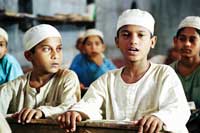
The Islamic Development Bank is providing Bangladesh a 10 million dollar grant to modernize the country’s traditional madrassah education system, according to newspaper reports.

The IDB support will be utilized in a project undertaken by the present Bangladesh Nationalist Party-led right-wing alliance government of Prime Minister Khaleda Zia, to produce science-minded madrassah students, the New Age newspaper reported on Saturday.

The Islamic Development Bank is going to donate 10 million dollars for the implementation of the modernization of madrassah education at secondary level. The government would contribute a nominal amount for the project, said an official.

The first-ever syllabus-based madrassah education in the then undivided Bengal was introduced in 1780 during the rule of the East India Company. Some minor changes were brought to the syllabus later on through individual initiatives at certain types of madrassah.

However, there is no curriculum as such for secondary and higher secondary madrassah education till date. And most of the Madrassah educated students are unable to get jobs in the competitive market nowadays.

The main objective of the project is to reduce the differences between madrassah and general education and produce skilled and productive citizens, according to the project proposal, which was submitted to the IDB recently.

The output of the project includes updating madrassah curriculum, improving textbooks, training madrassah teachers and science-minded madrassah students and helping them achieve skills to face challenges in the real world.

The inputs are reformation of the curriculum, construction of science laboratory buildings and supply equipment for facilitating science education, according to the proposal.

Laboratory buildings will be constructed in 64 madrassahs in 64 districts in the first phase and will supply scientific equipment to 515 madrassah by 2008 and 2009 under the project.

The Directorate of Secondary and Higher Education will implement the project under the supervision of the education ministry.

The National Curriculum and Textbook Board chairman, Professor Gazi Mohammad Ahsanul Kabir, who has prepared the project proposal, said the implementation would start in July.

The present condition of the madrassah curriculum is bad, he said. There are about 1400,000 students in secondary madrassahs across the country. 130,000 teachers are there in about 7,000 madrassahs.

The Bangladesh government provides 90 per cent of the salaries of teachers and employees of non-government secondary and higher secondary madrassahs which cost about Tk 600 crore per year.

Source: WebIndia123.Com (04.02.2006)

February 01, 2006

Bangladesh: Telecommunication


Mobile phone subscriber base expected to reach 18m by 2007

Bangladesh’s mobile phone subscriber base expected to reach 18 million by 2007 following massive surge of foreign investments in booming cellular marketLeading industry analyst and forecaster, BIS Shrapnel, has launched its Bangladesh Mobile Telecommunication, 2005 report. The extensive market analysis carried out for this study incorporated comprehensive interviews with most network operators and importers, as well as network dealers, and retailers.

Report author Mr. Priyam Shah explains that Bangladesh’s mobile phone market has achieved exceptional growth since the beginning of 2004, registering a massive 100 % growth in its subscriber base during 2004, and 137% during 2005. This trend is forecast to continue over the coming years, bringing the subscriber base to 18 million by 2007.

According to Mr. Shah, recent growth in the Bangladesh mobile market can be attributed to factors such as the deregulation of the telecommunication sector, low levels of tele-density, inadequate fixed phone infrastructure, high competition following the entry of two new operators (Banglalink and Teletalk) and, particularly, massive foreign direct investment (FDI) by telecom giants like Telenor, Telekom Malaysia (TM), Orascom, SingTel, and most recently by UAE-based Warid Telecom. Mr. Shah explains that foreign operators, in collaboration with local partners, have been working with the infrastructure to remove entry barriers and make mobile telephony more affordable and widen the base of mobile subscribers.

Mobile Price War

According to Mr. Shah, the entry of Banglalink in February last year has sparked a price war. Banglalink’s attractive launch offer included a new connection and handset at a low start-up cost of Tk 3,400. Following Banglalink, 3 (three) other private operators ­ GrameenPhone, Aktel and CityCell ­ have also come up with various value-added offers resulting in an intense price battle.

The development of a competitive mobile phone market is expected to prompt an easing in cell phone tariffs going forward, after years of escalation in what was a captive market. Consumers will also benefit from cheaper connection and call rates.

State-owned operator Teletalk, however, is expected to struggle in this new environment as it is still grappling with poor network coverage and inefficient management.

New SIM Tax

Controversially, the country’s 2004/05 annual budget (delivered in June 2005) imposed a tax of Tk 1,200 on each new SIM card connection, raising a huge furore among cell phone operators. Operators think that the new tax will pose a serious entry hurdle for low-income earners and will significantly stifle growth expectations.

According to the latest figures from BIS Shrapnel research, the sale of mobile phone connections has picked up after an initial slowdown in June and July. The tax on SIM cards was revised to Tk 900 in August in response to fierce demands from operators.

Mobile Handset Market

In tandem with the growing subscriber base, sales of mobile handsets has increased at a phenomenal pace. However, nearly 70 per cent of mobile handsets available in the local market have been entering through informal channels, depriving the Government and importers of a huge amount of revenue each year.

In a serious bid to turn around this drastic situation, the Bangladesh Government reduced the tax on mobile handset imports from Tk 1,500 to only Tk 300 in mid 2005. Mr. Shah explains that although this initiative has revived the situation to a certain extent, the effect on the grey market has not been as significant as was expected by distributors and importers. Interviews conducted by BIS Shrapnel with leading distributors reveal that the grey market is currently holding around 40% market share, but they are hopeful this will diminish over the coming months.

According to BIS Shrapnel research, Bangladesh’s mobile handset market is dominated by first-time users (nearly 85%), as the country is still in its infancy in terms of mobile phone usage. Further, 80% of the handset market is dominated by ultra-low to low-end handsets, available for less than Tk 4,500, due to the country’s low per capita income levels.

As with many other Asia-Pacific countries, the Bangladesh mobile handset market is predominantly captured by global handset giant Nokia (approximately 52% market share) followed by Siemens. Mr. Shah explains that the success of these 2 (two) vendors can be attributed to excellent handset quality, ease of use, an efficient sales and distribution network, dedicated after-sales service, and regular launches of low-priced handsets to meet market demand.

Source: BIS Shrapnel Pty Ltd (01.02.2006)

January 31, 2006

Bangladesh: Export Earnings


EPZs contribute $1.55b to Country’s Export Earnings

Country's Export Processing Zones (EPZs) have contributed 1.55 billion US dollar to the country's total export earnings of 8.65 billion US dollar in fiscal 2004-05, reports BSS.

Among the 6 (six) running EPZs, Chittagong EPZ registered the highest earnings with 772 million US dollar and Dhaka EPZ exported goods worth about 758 million US dollar, a high official source said.

Presently there are 6 (six) running EPZs, which are situated in Dhaka, Chittagong, Comilla, Mongla, Ishwardi and Nilphamari. A total of 221 industries are now in operation in these EPZs.

Investors from South Korea, Japan, Hong Kong, China, USA, UK, Germany, Pakistan, Malaysia, Taiwan, India, Panama, Denmark, Thailand, Sweden, Italy, Belgium, Switzerland, the Netherlands, France, Singapore, Nepal, Australia, Canada, Sri Lanka, Mauritius, New Zealand have so far invested in the EPZs with a total amount of over 860 million US dollar in addition to local investment.

A wide variety of products including readymade garments, garment accessories, other textile products, electronics and electrical goods, agro products, footwear and leather goods, metal and plastic products, paper products and sports items are being exported to some 186 destinations across the world.

World famous brand products like Nike, Reebok, Walmart, Kmart, Mother Care, Addidas, Hi-tech and others have been sourcing from these EPZs. Besides, many industries have been acting as out- source to Konika, Minolta, Sony, Nissan, Mitsubishi, Hino and other reputed multinational companies.

January 30, 2006

Bangladesh: FDI 2005


$800m FDI Received in 2005, BOI Executive Chairman tells FICCI meet

Declaring a bright prospect of foreign direct investment and higher economic growth in the country, Board of Investment Executive Chairman Mahmudur Rahman yesterday said an increased amount of US$ 800 million was received in FDI.

"In 2005, the provisional FDI inflow was 800 million US dollars while the amounts were US$ 460 million and US$ 268 million in 2004 and 2003," he told the monthly luncheon meeting of Foreign Investors' Chamber of Commerce and Industry (FICCI) in Dhaka.

The BOI chief executive also mentioned that every year the country is getting a significant amount of FDI for energy sector. Investment promotion is a long-term process, he observed.

Describing a positive result of the growing amount of foreign capital investment in productive sectors, Rahman said as per Bangladesh Bank statistics, in the first three months of this fiscal year, the manufacturing and industrial growth was more than 10 percent and nearly 10 percent.

He stressed the need for first-class government infrastructure as essential one for attracting more FDI.

"Impartial administration, dynamic and credible public institutions and transparent policy are the main elements for first-class investment-friendly government infrastructure. Investment decision is not a simple decision for the investors, it is related to many things," he said.

Describing present condition of the country as the best for FDI, he said there are three excellent elements now the country has got--energy resources, excellent bunch of people as workforce and market access.

"But we have to work together irrespective of party affiliation. FDI is not a matter of BNP, AL, JP or any other party--it is a matter of the country," he told his business audience, adding that the country now needs physical infrastructure, government infrastructure and aggressive promotion around the world for attracting investment.

Replying to the criticisms by some economists about the FDI, he said, "They did not come up with statistics, and statement without statistics is political."

The FICCI president said although the investment climate in the country is favorable compared with most South Asian countries, particularly in terms of its competitive labor costs and flexible labor laws, the cost of doing business in Bangladesh is perceived to be high.

"High costs are reflections of corruption, weak law-and-order, inadequate infrastructure and services and distressed financial markets", he said.

He pointed out the imposition of 10 percent tax at source on royalty, technical know-how fees and technical assistance fees in excess of 2.5 percent of profits by Income Tax authorities created "discontent of foreign investors".

January 26, 2006

Bangladesh: CSR Award 2005


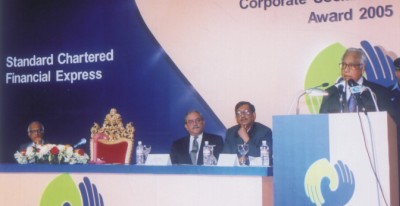
Unilever Bangladesh Ltd and Dhaka Bank Ltd., the winner of StanChart-Financial Express CSR Award 2005

President Iajuddin Ahmed yesterday called upon corporate houses to make contribution to economic development by improving the quality of life of their workforce.

"Corporate social responsibility (CSR) is a crucial need for promoting sustainable development and long-term advancement of business," the president said at the Standard Chartered-Financial Express Corporate Social Responsibility Award 2005 ceremony in Dhaka.

Unilever Bangladesh Ltd and Dhaka Bank Ltd have been adjudged this year's winners in manufacturing and services sector categories.

Economist Wahiduddin Mahmud, chairman of the Standard Chartered-Financial Express Corporate Social Responsibility Award Trust, chaired the programme. Osman Morad, chief executive officer of Standard Chartered Bank Bangladesh, and Moazzem Hossain, editor of The Financial Express, also spoke.

The president also said as CSR is a growing demand, businesses competing in the global economy can no longer afford to ignore the issue.

Iajuddin said Bangladesh has been making relentless efforts to adopt operational principles of corporate governance in line with the international best practices.

"The regulatory agencies have incorporate many of the relevant issues into their respective operational framework and the process is still on," he added.

Wahiduddin Mahmud said companies worldwide are increasingly paying attention to CSR in their business approaches by attempting to address social issues and engaging themselves in not-for-profit community welfare activities.

Sanjiv Mehta, chairman and managing director of Unilever Bangladesh Ltd, and Shahed Noman, managing director of Dhaka Bank, received the awards.

January 24, 2006

Bangladesh: Banking 2


11 PCBs reduce Tk 500cr classified loans

Some 11 private commercial banks (PCBs) have been able to reduce their non-performing assets by cutting Tk 500 crore classified loans in a single year.

Classified amount of these PCBs was around Tk 2,900 crore in December 2004 but these banks were able to cut Tk 500 crore of the amount by December 2005, senior executives of these PCBs told Bangladesh Bank (BB) at a meeting yesterday.
Managing directors and senior executives of following banks were present at the meeting.

1. Pubali Bank Ltd,
2. Uttara Bank Ltd,
3. National Bank Ltd,
4. AB Bank Ltd,
5. IFIC Bank Ltd,
6. City Bank Ltd,
7. Social Investment Bank Ltd,
8. Al-Arafah Bank Ltd,
9. Oriental Bank Ltd,
10.First Security Bank Ltd and
11.Bangladesh Commerce Bank Ltd

Banks eye to lower their average classified amount to 10 percent by December this year, which is now 13 percent. Managing directors and senior executives of the PCBs attended the monitoring meeting with Mohammad A (Rumi) Ali, BB deputy governor, in the chair.

At the meeting the central bank also asked these PCBs to submit their loan status of the 2001-02 financial year within a month. Classified loan of Oriental Bank has come down to 23 percent from 28 percent earlier, Social Investment Bank's 7.4 percent from 11 percent and First Security Bank's 15 percent from 19 percent earlier, meeting sources said.

Oriental Bank was given the problem bank status much earlier but the Social Investment Bank and First Security Bank were given the status in the recent years. According to official statistics, performances of these banks are improving after bringing them under the problem bank unit of the BB.

January 23, 2006

Bangladesh: GDP growth


BBS Projects 6.86pc GDP rise in FY06

The country may strike the highest-ever GDP growth of 6.86 percent this fiscal year thanks mainly to a strong performance of the agriculture sector, according to a preliminary estimate of the Bangladesh Bureau of Statistics (BBS).

The BBS made the estimation based on the data of the first half of FY06. Although the BBS previously used to make the yearly forecast on the basis of data of the first three quarters, this time it made it earlier as part of its drive to develop a system of making quarterly economic growth projections.

The estimate will be tabled at the current session of parliament as well as sent to the Bangladesh Bank to assist it in its policy review, said a planning ministry source.

The average level of annual GDP growth was around 3 percent in the 1970s, 4 percent in 1980s and 5 percent in 1990s. The highest annual GDP growth so far has been posted in FY04 at 6.27 percent.

The BBS also has made an upward revision of its GDP growth calculation for FY05 from 5.38 percent to 5.61 percent.

Agriculture contributes 17 percent to the GDP (gross domestic product). The BBS projects a 5.01 percent growth in agriculture in FY06, which was as low as 0.78 percent in FY05, due to the devastation by severe flooding.

This year's aaush production has been 17.45 lakh metric ton (MT), up by 16.03 percent from that in the previous year.

The aman production has been projected at 1.10 crore MT, 12 percent more than FY05's. Because of the flooding, aman production in FY05 was only 98 lakh MT, down by 15 percent from FY04's.

The projected boro production in FY06 is 1.40 crore MT, 1.18 percent more than FY05's.

Industries that contribute about 27 percent to the GDP may achieve an 8.98 percent growth this year.

Among the industries, the manufacturing sector accounts for almost 17 percent of the GDP. This year, large and medium industries are estimated to score a 9.2 percent growth, which was 8.2 percent in FY05. Small industries are reckoned to grow by 8.8 percent in FY06. The rate was 7.9 percent in FY05.

According to the BBS projection, food, knitwear, cotton, textiles, leather, pharmaceuticals, cement and plastic industries will see substantial growth this year. It estimates the construction sector to witness an 8.96 percent growth in FY06, which was 8.76 percent in FY05.

The gas production will grow this fiscal year by 9.14 percent, which was 8.87 percent in FY05.

However, the bureau reckons the power sector's growth will go down from 8.58 percent in FY05 to 8.07 percent.

Bangladesh Institute of Development Studies Research Director Zaid Bakht said the estimated growth of the BBS is probable, as it largely based on the agricultural growth, mainly in the aman production.

Over the last two years the import of capital machinery as well as the industrial credit has seen a substantial rise, so the industrial production this year will also rise, he observed.

Zaid however pointed out three risk factors. Firstly, the World Bank and the International Monetary Fund (IMF) have been pressurising the government to adjust the domestic oil prices with the international ones. Though the government so far has managed to avoid their insistence, it may not succeed to do so for long. And if the government goes for any further upward adjustment of oil prices it may have a negative impact on the economy, particularly on the boro production.

Secondly, Zaid said, there is an uncertainty in the export sector. If export does not pick up in the coming months the GDP growth may fall short of the estimate.
Thirdly, the political situation in the last half of this fiscal year may become volatile and slow down the economic growth, he told The Daily Star.

On a query on the probable impacts of the ongoing controversies over the Election Commission, he said the government should not do anything that would heat up the political situation and ultimately affect the economy.

January 03, 2006

Bangladesh: Banking 1


Banks record 29% operating profits in 2005

The country's private commercial banks (PCBs) witnessed a hefty growth -- by about 29.10% -- of their aggregate operating profits in calendar year 2005 over those of the previous one.

The operating profit of the 29 PCBs out of a total of 30 increased by over Tk 6.0 billion to Tk 28.24 billion in calendar 2005, from Taka 21.88 billion in calendar 2004. The profit figure of the Oriental Bank Ltd was not available. Most of the third generation banks, which started operation in the late 1990s, performed well in terms of operating profit, the provisional data indicated.

Sources, however, said the operating profit does not indicate the real financial position of a bank. Because, the banks have to leave aside provisioning against bad debts and taxes that are paid to the government from the operating profit.
According to the central bank statistics, at least 8 PCBs faced provisioning shortfall amounting to Tk 4.02 billion as on September 30, 2005.

The Islami Bank Bangladesh Limited held the top position among the PCBs, earning Tk 2.89 billion in operating profit in 2005 against Tk 2.39 billion in the previous 2004. The Prime Bank Ltd., however, was in 2nd position with an earning of Tk 1.66 billion in operating profit in the last year against Tk 1.37 billion in the previous one. The Uttara Bank Ltd. secured the 3rd position with Tk 1.61 billion in operating profit last year compared to Tk 1.24 billion in the previous year.
Meanwhile, at least 2 PCBs - the Social Investment Bank Ltd. (SIBL) and First Security Bank Ltd. - out of 29 under report, recorded lower operating profits last year due mainly to higher bad debts and thin business, the sources noted.

The operating profit of the SIBL dropped to Tk 210 million in 2005 from Tk 420 million in 2004, while that of the First Security Bank Ltd, from Tk 390 million in 2004 to Tk 13.51 million in 2005. The operating profits of the Southeast Bank Ltd. and Pubali Bank Ltd. were Tk 1.54 billion and Tk 1.52 billion respectively in 2005 against Tk 880 million and Tk 750 million in the previous year.

The City Bank Ltd. earned Tk 1.35 billion in operating profit in 2005 followed by the United Commercial Bank Ltd. (UCBL) with Tk 1.20 billion. The amounts were Tk 950 million for the City Bank Ltd. and Tk 900 million for the UCBL in 2004. The operating profits of the National Bank Ltd. (NBL) and the EXIM Bank Ltd. were Tk 1.20 billion and Tk 1.15 billion respectively in 2005 against Tk 1.12 billion and Tk 830 million in 2004.

Arab Bangladesh (AB) Bank Ltd. earned Tk 1.05 billion in operating profit in 2005 followed by the Mercantile Bank Ltd. with Tk 1.03 billion. The amounts were Tk 720 million for the AB Bank Ltd. and Tk 870 million for the Mercantile Bank Ltd. in 2004.

The operating profits of the Dhaka Bank Ltd. and the National Commerce and Credit Bank Ltd. (NCCBL) were at the same level -- at Tk 1.02 billion in 2005 -- against Tk 850 million and Tk 720 million in the previous year.

On the other hand, the operating profits of the Dutch-Bangla Bank Ltd. and the Eastern Bank Ltd (EBL). were also at the same level -- at Tk 1.01 billion in the last year -- compared to Tk 680 million and Tk 910 million in the previous one.

The Premier Bank Ltd. earned Tk 900 million in operating profit in 2005 followed by the Bank Asia Ltd., with Tk 810 million. The amount was Tk 930 million for the Premier Bank and Tk 660 million for the Bank Asia in 2004. The operating profits of the BASIC Bank Ltd. and the IFIC Bank Ltd. were Tk 800 million and Tk 780 million respectively in 2005 against Tk 720 million and Tk 780 million in 2004.

The Mutual Trust Bank Ltd. made operating profit worth Tk 670 million in 2005 against Tk 520 million in 2004, while the figure for the Standard Bank Ltd. stood at Tk 630 million against Tk 490 million in 2004. The operating profits of the One Bank Ltd. and the BRAC Bank Ltd. were Tk 610 million and Tk 600 million respectively in 2005 against Tk 490 million and Tk 210 million in the previous year.

The Al-Arafah Islami Bank Ltd. earned Tk 600 million in operating profit in 2005 followed by the Shahjalal Islami Bank Ltd. with Tk 501 million. The amounts were Tk 370 million for Al-Arafah Islami Bank and Tk 120 million for the Shahjalal Bank in 2004.

The Jamuna Bank Ltd. made operating profit worth Tk 450 million in 2005 against Tk 320 million in 2004, while the figure for the Trust Bank Ltd. stood at Tk 310 million in 2005 compared to Tk 28 million in 2004.

January 02, 2006

Bangladesh: Pharmaceuticals


WTO/TRIPS agreement comes as a blessing in disguise, New Year brings fresh hopes for pharma sector

Bangladesh has already entered a regime of huge export potentials in pharmaceutical sector, albeit silently, from day one of 2006 as a WTO/TRIPS agreement, beneficial to the country, came into effect from Saturday.

"The country has now entered into a favorable business environment under the auspices of the relevant World Trade Organization (WTO)/Trade Related Intellectual Property Rights (TRIPS) agreement on drug," a senior Executive of Beximco Pharmaceuticals told Sunday.

The WTO council responsible for intellectual property on 27 June 2002 approved a decision extending until 2016 the transition period during which least-developed countries (LDCs) do not have to provide patent protection for pharmaceutical products.

It also approved a waiver for LDCs on exclusive marketing rights for any new drug during the period."As per the agreement, the LDCs including Bangladesh would be able to manufacture and export patented drugs until 2016," President of Bangladesh Association of Pharmaceutical Industry (BAPI) SM Shafiuzzaman said.

Other non-LDC countries, including India, China and Pakistan, will not be able to manufacture and export patented drugs, as the facility will be reserved for LDCs until 2016, he explained.

Among the 49 LDCs, Bangladesh fortunately is the only country, which has a strong pharmaceuticals manufacturing base.

"If Bangladesh can avail itself of the opportunity, it could export up to Tk 100 billion worth of drugs annually," the BAPI leader claimed.

The BAPI sources said to grab the opportunity, the government needs to ensure that the country's existing Patent Act of 1933 complies with the WTO/TRIPS agreement.

In the Patent Act, there is a provision of not allowing the local companies to manufacture patented drugs, which presently contradicts the WTO/TRIPS provision.

The government also has to take advantage of compulsory licensing and parallel import to tap the huge potentials of pharmaceutical sector, the BAPI leaders pointed out.

Bangladesh's pharmaceutical industry now exports drugs to 62 countries, including Germany, Taiwan, Singapore, the UK, the Netherlands, Chile, France, Pakistan, Kenya and Sudan.

The country has over 200 companies comprising small, medium, large and multinational companies, which control around 95% of the country's pharmaceutical market.

The pharmaceutical industry recorded nearly 15% - 20% annual growth in recent times. To avail the opportunities under TRIPS/WTO provision, a good number of new pharmaceutical companies initiated operations in the country.

Many pharmaceutical industries including Square, Beximco, Novartis invested huge amounts to enhance their production capacity. Investments in the country's pharmaceutical sector were over US$ 1.0 billion in last several years, the BAPI sources said.

Foreign pharmaceutical companies including those of India have already successfully penetrated the Bangladesh market and many more are in the pipeline to reap the benefit of the WTO agreement, said sources. Bangladesh, however, initiated pharmaceutical export in late the 1980s.

Despite the fact that there was no support or incentive from the government, a few companies with their own initiatives started exporting finished formulations to some of the less-regulated overseas markets like Myanmar, Sri Lanka and Nepal.

After being successful in these less-regulated markets, in early-90s a number of major Bangladeshi companies also took initiative to explore some of the more-regulated markets like Russia, Ukraine, Georgia and Singapore.

Success in registering and marketing these products in these countries was a major breakthrough for Bangladesh pharmaceuticals industries.

This was a clear testimony not only to the product quality, but also to the capabilities to meet stringent regulatory requirements. Currently, Bangladesh is exporting a wide range of pharmaceutical products covering all major therapeutic classes and dosage forms.

Alongside regular brands, it is also exporting high-tech specialized products like inhalers, suppositories, nasal sprays, indictable and infusions.

Apart from overseas retail customers, the country is also supplying to world-renowned hospitals and institutions like Raffles Hospital of Singapore, Jinnah Hospital of Pakistan, MEDs of Kenya, SPC of Sri Lanka and KK Women & Children Hospital of Singapore, the BAPI sources said.

Bangladesh: Agriculture


Rice production in Bangladesh doubled in three decades

Bangladesh's rice production has been more than doubled in the last three decades, increasing from 11 million tons in 1975 to 25 million tons in 2003, a 3.3% growth per year, official news agency BSS reported Sunday.

Cereal production more then doubled from 11.5 million tons in 1975 to 27 million tons in 2003, a 3.8% growth per year, according to a recent World Bank report titled "Promoting the rural non-farm sector in Bangladesh-05."

The report detected three major reasons behind this huge growth: Biological yield per hectare doubled between 1975 and 2002; Use of shallow tube-well irrigation pumps as irrigated area increased from 2.8 million hectares to 4 million hectares; and Adoption of mechanical tillage, allowing more timely cultivation and increased labor productivity.

In the early 1970s, there were about 26,000 irrigation pumps in the country whereas it is now 8,53,728 all together. On the other hand, in the late 1980s, there were only about 3,000 power tillers but the number raised to nearly 240,000 currently, the report said.

The expansion of agriculture sector has also generated a massive pace in rural non-farm growth, making 42% of total rural employment. The report indicated that nearly half of household income in rural areas is generated in the various non- farm activities including manufacturing and maintenance services, inputs and grain trade, crop and food processing, and rural transport.

January 01, 2006

Bangladesh: Economic Freedom


Bangladesh and The Index of Economic Freedom 2005

TRADE POLICY
Score: 5–Stable (very high level of protectionism)
The U.S. Department of Commerce reports that “business people consider Customs to be…a thoroughly corrupt organization in which officials routinely exert their power to influence the tariff value of imports and to expedite or delay import and export processing at the ports.”

FISCAL BURDEN OF GOVERNMENT
Score—Income Taxation: 2.5–Stable (moderate tax rates)
Score—Corporate Taxation: 4–Better (high tax rates)
Score—Change in Government Expenditures: 3.5–Stable (low increase)
Final Score: 3.5–Better (high cost of government)

Bangladesh’s top income tax rate is 25 percent. The top corporate tax rate is 30 percent, down from the 40 percent reported in the 2004 Index.

GOVERNMENT INTERVENTION IN THE ECONOMY
Score: 3.5–Stable (high level)
According to the World Bank, the government consumed 5 percent of GDP in 2002, up from the 4.5 percent reported in the 2004 Index

MONETARY POLICY
Score: 2–Worse (low level of inflation)

CAPITAL FLOWS AND FOREIGN INVESTMENT
Score: 4–Worse (high barriers)
Foreign investors receive national treatment and are allowed full ownership in most sectors. The International Monetary Fund reports that foreign investments, with the exception of investments in the industrial sector, require approval. Most of the barriers that remain are informal or involve inadequate implementation of existing laws.

BANKING AND FINANCE
Score: 5–Worse (very high level of restrictions)
According to the Economist Intelligence Unit, “State-owned banks—known as nationalised commercial banks, or NCBs—dominate the financial sector. Given that the government is the owner, regulator and major customer of the NCBs, there has been ample opportunity for mismanagement and political interference…. [T]he banking sector remains hampered by poor credit discipline, an archaic loan recovery system, corruption, inefficiency, overstaffing and unionisation.”

WAGES AND PRICES
Score: 3–Stable (moderate level of intervention)
The government affects prices through its many state-owned monopolies.

PROPERTY RIGHTS
Score: 4–Stable (low level of protection)
The constitution provides for an independent judiciary; however, reports the Economist Intelligence Unit, “The legal framework is archaic and court procedures are often cumbersome.

REGULATION
Score: 5–Stable (very high level)
Corruption is the largest burden on business. Other problems include a bureaucracy characterized by vested interests, lack of transparency, and outdated business laws that do not protect private contracts.

INFORMAL MARKET
Score: 4.5–Stable (very high level of activity)

December 31, 2005

Bangladesh: Highway


Malaysian firm to build Bangladesh highway


Bangladesh has given the go-ahead to a Malaysian firm's proposal to construct a highway linking Dhaka and Chittagong at a cost of $896 million - the biggest private investment in road building.

A senior official of the communications ministry here said a high-powered committee approved the proposal last week and sent it to the cabinet for final approval.

"If the cabinet approves the proposal, it will be the biggest private sector investment in the road sector," the official told Wednesday.

The Malaysian company, Azimat Consortium, will build the 210-km highway to Chittagong, about 250 km southeast of here, under the 'Build Own Operate and Transfer' scheme.

Under the proposal submitted by Azimat to the communications ministry in June this year, the 210 km four-lane toll highway will be constructed in five years without any financial involvement of the Bangladesh government.

The proposal also seeks a 35 year concession period, including 5 years of construction time, tax holiday for 10 years after starting toll collection and duty-free import of equipment for construction purposes. The toll collection has been divided into 5 year slabs and the company estimates that it will earn about $12.7 billion in toll revenue over 30 years.

The company proposes to construct 13 flyovers, 2 bridges on the Meghna and Sitalakhya rivers, 4 toll plazas, parking lots, rest houses, toilets, CNG and petrol filling stations, eateries and mosques. It will also install closed circuit television cameras at strategic points.

The highway will augment the Chittagong port's activities by ensuring rapid supply and delivery of export and import items from the capital to the port city and vice versa.

Bangladesh: Telecom

Bangladesh cell phone usage grows by 144%

The number of mobile phone users in Bangladesh grew by 144 per cent in 2005, to 9.4 million in December from 3.85 million a year earlier, market officials said yesterday.

The gains raised the mobile phone penetration rate among Bangladesh’s 140 million people to 6.7 per cent from 2.75 per cent. The fast-growing mobile phone market is expected to have 18 million users by next year.

Bangladesh’s top mobile company, Grameenphone, majority owned by Norway’s Telenor, which had a subscriber base of 2.4 million in December 2004, doubled that number to five million, accounting for 60 per cent of the market, said Syed Yamin Bakht, the company’s general manager.

Telecom Malaysia’s AKTEL maintained its second position, with subscriptions rising to 2.6 million from 1.1 million a year ago, said Asif Iqbal, head of marketing at the company.

Egypt’s Orascom Telecom’s Banglalink established itself in third position by aggressively marketing its service. Banglalink began its Bangladesh operations in March and attracted 1.1 million subscribers by December, a company official told Reuters.

Singapore Telecommunications Ltd. with Pacific Bangladesh Telecom Ltd (PBTL), operator of CityCell, fell to fourth position from third a year ago, with its subscriber base rising from 350,000 a year ago to 500,000.

State-run Teletalk Bangladesh Ltd had 200,000 after launching its service in March.

A Warid Telecom International (LLC) of the United Arab Emirates plans soon to launch Bangladesh’s sixth mobile phone company.

Bangladesh has 1 million fixed-line phones provided by the state-owned Bangladesh Telegraph and Telephone Board (BTTB).


WorldTel to start operation in Dhaka next March 2006

WorldTel Ltd, the lone license holder for providing land phone services in Dhaka zone, will start its operation by next March.
"We hope to start operation in next March with initial capacity of 100,000 lines and increase the number to five lakh by the end of the next year," Nayeem Chowdhury, chief executive officer of WorldTel Ltd, an UK-based telecommunications company, told The Daily Star yesterday.

The company has already imported equipment from Germany and China for providing phone service with wireless local loop (WLL) technology and installation work is going on in full swing, he said. The company had a plan to launch operation by December but the delay in obtaining allocation of microwave frequency held back the launch, Chowdhury added.

WorldTel is primarily investing around US$ 50 million and will increase it to $300 million. The company obtained licence from the government in July 2001 to provide 300,000 land phones in Dhaka at an investment of about $300 million on a build-operate-own basis with four years of exclusive right.

There are one million fixed-line phones provided by state-owned Bangladesh Telegraph and Telephone Board (BTTB) and more than nine million mobile phone lines, supplied by five operators, in the country of around 140 million people.

The demand for fixed phones in the capital is estimated to be around 10 lakh while the registered demand with the BTTB is about two lakh, sources said. The BTTB does not have the capability to meet the growing demand for land phones due to infrastructural inadequacy.

WorldTel went to court after the telecom regulator cancelled its exclusive right terming it anti-competitive and violative of the Bangladesh Telecommunications Act 2001.

The Appellate Division of the Supreme Court on August 23 this year dismissed WorldTel's petition for retaining its four-year co-exclusive right with BTTB to provide land phone in Dhaka, paving the way for private land phone companies to operate.

The central zone, also known as Dhaka Multi-Exchange Area, covers Dhaka city, Jinjira, Savar, Narayanganj, Gazipur and Tongi, and accounts for about 60 percent of the total demand for fixed phones in the country.

December 21, 2005

Bangladesh: Financial Education


Citigroup plans to hold financial education summit in Bangladesh

Citigroup plans to hold an international financial education summit in Bangladesh. As financial education is increasingly becoming important for micro finance activities, Citigroup's top executives in Asia Pacific region plan a summit in Bangladesh, the birthplace of micro credit.

"We will hold an annual summit in Bangladesh shortly," Ashok Vaswani, Citigroup CEO for Consumer Banking in Asia Pacific, told The Daily Star. After visiting India and China, Citigroup's top officials will select a place for the third conference.

Last year, the group committed US$200 million over 10 years to support financial education programmes and organisations around the world. The two-day second Financial Education Summit 2005 jointly organised by Citigroup and INSEAD ended in Kuala Lumpur on December 13.

More than 250 delegates from 30 countries participated in the summit held at Prince Hotel with representatives from private, government, and non-government organisations (NGOs). An eight-member team from Bangladesh also jointed the event.

Donald J Johnson, secretary general of Organisation for Economic Co-operation and Development (OECD), Dinh Tuyen Truong, trade minister of Vietnam, Anil Gaba, professor of risk management of Decision Science of INSEAD, and Liu Zhongjun, vice president of China Banking Association, were among the keynote speakers at the summit.

Ashok Vaswani said, "Our goal was to understand the level of interest in financial education around the region."

There is a tremendous need to help people budget and mange their income, save and invest efficiently, protect themselves against fraud and prepare for the future, Vaswani said.

"Financial education is important for everyone, and we should begin as early as possible." "Our commitment is serious. It is broad. It is long term. It cuts across ages, nationalities, income levels and financial experience."

The Citigroup Foundation focuses its grants primarily on three areas -- financial education, educating the next generation, and building communities and entrepreneurs. International Herald Tribune supported the promotion of this event to attract participants from different countries.

INSEAD is widely recognised among the world's top-tier business schools as one of the most innovative and influential one. It is the only business school with full-fledged campuses in Asia and Europe. First financial education summit was held in Hong Kong a year ago.

December 20, 2005

Bangladesh: Foreign Direct Investment (FDI)


Over $450mn FDI in Bangladesh till June 2005

By Farid Ahmed, Dhaka : Bangladesh saw a big rise in foreign direct investment into the country between January and June this year though economists have warned that the recent spike in terrorist incidents in the country could adversely affect inflow of funds.

The central bank statistics shows the country attracted foreign investment of $453.7 million till June 30 this year, compared to $138.3 million investment in the first six months of 2004, a year which saw an overall amount of foreign direct investment worth $460.4 million, the New Age daily reported Tuesday.The data compiled in the latest survey conducted by the Bangladesh Bank showed that the inflow of foreign investment covered equity capital of $247.3 million, reinvestment earnings of $140.8 million and intra-company loans of $65.6 million.

The government's investment promotion agency, the Board of Investment, intends to increase the inflow of foreign direct investment to about $800 million in 2005, which will end in about two weeks.

The target of investment inflow into the country for the next year is estimated at $1 billion and the board is more optimistic about achieving the target, considering the interest shown by India's Tata group, UAE's Dhabi Group and other firms from around the world to invest in Bangladesh.

The country received foreign direct investment amounting to $79 million in 2001, $52 million in 2002, $268 million in 2003 and $460 million in 2004, showing a higher growth in foreign investment in recent years. Economists, however, fear that the recent spate of terror attacks might adversely impact FDI.

Meanwhile, despite the confrontational politics and Islamist militancy, Bangladesh has been listed among the "Next Eleven" by Goldman Sachs in the list of 'next generation of nations with promising economic growth potential'.Bangladesh has found itself in line with Pakistan, Iran, Indonesia, Turkey, Egypt, Nigeria, Vietnam, Philippines and, more importantly, South Korea and Mexico after the US-based investment banking and securities firm described Brazil, Russia, India and China as the economic powerhouses of this century, calling them BRIC.

"Economic potential being realised in Pakistan and Bangladesh will have important consequences since it will interest both countries in investing in peace and stability, rather than confrontation," Goldman Sachs observed.

When asked for his comment on the latest foreign investment inflow, the Executive Chairman of the Board and also Energy Advisor, Mahmudur Rahman, said the interest of foreign companies in investing in Bangladesh has proved that it has become an attractive investment destination.

"This is the result of consistent macro-economic stability, facilitative action taken by the Board of Investment and aggressive promotion by the government," he said, expressing "high hopes" that inflow of foreign direct investment in the coming years would be much higher than in recent years.

Bangladesh: Development Issue


Bangladesh: impressive progress in economic and social sectors

Since independence Bangladesh has made some remarkable progress in a number of economic and social sectors. In particular, the country’s economic and social development during the past decade has been quite impressive by most measures. The country is progressing well in meeting the Millennium Development Goals (MDGs).

The MDGs articulate the solemn obligations and commitments of the government to improve the economic and social lives of the people as fast as possible. These goals have been planned to be achieved by the year 2015. The failure to make reasonable progress in achieving the goals and targets enunciated in the MDGs will be considered as the failure of political leadership in the country.

The advent of democracy since the fall of president Ershad in January 1991 saw a series of economic reforms put in place by successive governments with greater macroeconomic stability, a move towards trade liberalisation, structural reform and economic deregulation. All these have resulted in a significant increase in the rate of growth in gross domestic product (GDP), with an average growth of more than 5% per year.

Faster economic growth has helped the country to reduce the poverty rate to a large extent since 1990. In fact, since independence Bangladesh “has achieved a positive development record in the face of extremely weak initial conditions, virulent and often times violent politics, fragile institutions and poor governance, frequent large-scale destruction by natural calamities, and the negative global image generated by these”. So the level and pace of economic and social development achieved so far are something to reckon with.

In Bangladesh, prospects for continued high economic growth of 5-6 per cent per annum over the next few years are good in view of current macroeconomic stability, reasonable savings and investment rates and the pace of economic reforms being pursued by the government. According to a recent World Bank assessment (Bangladesh PRSP Forum Economic Update, November 2005), the country’s economic growth could accelerate to 7-8 per cent if the government scales up its efforts to reduce regulatory costs, address infrastructure constraints (especially ports and power), deepen and improve the efficiency of the financial sector, improve labour quality, and further lower trade barriers.

Progress on many social measures has been encouraging. Primary enrolment for both genders is almost universal, and the secondary enrolment rate has more than doubled since independence. Bangladesh has already met the Millennium Development Goal on gender parity in school enrolment at secondary and primary levels. After Sri Lanka, Bangladesh is the only country in South Asia to have achieved this parity in education enrolment on gender basis.

The child mortality rate has halved, and life expectancy has increased by more than 15 years since independence. Another success in social sectors in Bangladesh is the significant and rapid decline in infant and child mortality rates. Infant mortality rates have declined from140 to 60 per thousand live births between1972 to 2000 while child mortality rates from 95 to 30 during the same period of time. The decline in infant and child mortality rates has been among the fastest in the developing world. Given the current rate of progress, Bangladesh and Maldives will be the only South Asian countries to achieve their MDGs of reducing infant and child mortality by the year 2015.

Population growth rate has also declined to a great extent, coming down to 1.5 per cent by mid-1990s. Women in Bangladesh have experienced vast improvements in their health during the past few decades due, in part, to an increased nationwide commitment to family planning and population control. In the early 1970s, very few women used any form of contraception to prevent pregnancy. Since that time, the contraceptive usage rate has skyrocketed from 3% to 54%. Likewise, the total fertility rate has declined from 6.4 to 3.3 children per woman. Women also get reproductive health services provided by the government medical centres and NGOs.

Today, family planning measures are widely used in Bangladeshi and women have taken a lead role in choosing the family size. The social stigma attached to the use of contraceptive has long gone, and through education, awareness, motivation, outreach, and commitment, contraception has become rather a social norm. As a result, women in Bangladesh are having smaller families and are now better able to fully participate in the communities and society.

Bangladesh has nearly achieved the safe water goal, with 97% of the population having access to pathogen-free water. Although Bangladesh has often started from a low base, it has achieved some notable success both in terms of the rate of progress and actual development outcomes compared to its neighbours as indicated by the table below.

Selected World Development Indicators:

Country Decrease in child mortality 1990-2000 (%) Maternal mortality ratio (per 100,000 live births) Decrease in fertility rates 1990-2003 (%) Increased access to primary education 1990-2000 (%) Child immunisation rates for DPT (%) Proportion of women employed in labour force (%)

Bangladesh -52 380 -29 59 85 68
India -29 540 -24 4 70 45
Pakistan N/A 500 -22 N/A 67 39
Nepal -29 740 -23 19 78 58
Source: World Development Indicators, World Bank, 2005
N/A = Data not available

It is apparent from the above table that on all six measures of social development Bangladesh has outperformed India, Pakistan and Nepal. The negative image of Bangladesh in terms of political violence, poor governance and corruption often suppresses the achievements the country has gained over the years in economic and social sectors.

The success of women in terms of education, training, employment and income-earning activities is very impressive. Women in both urban and rural areas are now heavily engaged in social, economic and cultural life in the society. Many barriers to women’s participation in the society have been removed in the last two decades, facilitated by both government and non-government organisations. This has made significant contribution to women’s emancipation in Bangladesh.

Micro credit is an area where Bangladesh has achieved outstanding success compared to many other developing countries in the world. The country is now known as the “motherland of micro credit”. According to the current estimates, about 15,000 NGOs, large and small, are registered with the NGO Bureau in Bangladesh. 9 million households have accessed the different kinds of micro credit, which has largely helped poverty reduction in the country, especially in rural areas.

Women have taken advantage of micro credit provided by different organisations such as Bangladesh Rural Development Board (BRDB), Grameen Bank, Bangladesh Rural Advancement Committee (BRAC) and Palli Karma Shahayak Foundation (an agency providing funding to government and non-government agencies engaged in implementing micro credit programs and projects).

In general, people in Bangladesh are resilient, flexible and adaptable. They are eager to change for the better if they are given opportunities. People understand the benefits of change and transformation and have a “will to develop” even under adverse circumstances. The remarkable success the country has achieved so far in different economic and social sectors reflects the indomitable spirit of the masses to move forward towards higher levels development, even under difficult political climate.

December 15, 2005

Bangladesh and ICT sector


Bangladesh achieves huge growth in IT export

Bangladesh has witnessed 600 percent export growth in the information technology (IT) sector during the last five years. The Financial Express reported on Thursday that the total amount of IT exports increased from 2.24 million US dollars in fiscal 2000-01 (July 2000-June 2001) to 12.68 million dollars in fiscal 2004-05.

According to the daily, out of the 12.68 million dollars, 9.64 million dollars came from software export and rest of the amount came from data processing and computer consultancy.

President of the Bangladesh Association of Software and Information Service (BASIS) Sarwar Alam was quoted as saying that he believed that such a growth rate would continue in the coming years.

He substantiated his point by saying that there had been a number of joint venture cooperation contacts between some Danish companies and Bangladeshi software firms for exporting software and IT services to the European market, which would keep the growth rate at present level.

A number of big software companies are in the process of opening up their own marketing office in North America and Europe, the daily said.

Besides, the local market-based companies are focusing on process and quality improvements in line with international requirements and a good number of e-governance and e-commerce based domestic work orders are also expected.

"The recent trends indicate that the industry has reached a take-off stage and in the coming years it is poised for high growth," Sarwar was quoted as saying.

But to get take-off, the industry now needs more IT-skilled professionals and establishment of institutional credit as per work orders with maximum 5 percent interest, he said.

The market size of the total Information and Communication Technology (ICT) industry in the country is estimated to be approximately 11 billion taka (about 169 million US dollars) per year not including the telecom sector.

At present, more then 50 software and IT service companies are exporting their services to 30 countries in the world including the United States, Canada, EU countries, Middle East, Japan, Australia, South Africa and some of the South East Asian countries.

It is estimated that around 5,500 software professionals are employed in more than 300 registered software firms in the country.

December 14, 2005

Law and Order situation


Most people unhappy with Law and Order situation

Some 45.17 per cent people surveyed are not happy with the present law and order situation while 25.55 per cent mentioned it as unbearable.

It was revealed in a survey conducted by Society of Justice (SOJ) among 321 respondents selected randomly covering major districts of the country in October-November, 2005. Only 29 per cent people said they are happy with the law and order to some extent.

AKM Saifullah of Bangladesh Institute of Law & International Affairs (BILIA) disclosed the findings of survey in an international seminar on 'Rule of Law and Human Rights' held Tuesday in the BILIA auditorium.

The seminar was presided over by SOJ President Prof. Mizanur Rahman while former chief adviser of caretaker government Justice Habibur Rahman was present as the chief guest.

Deputy High Commissioner of Australian High Commission Richard Rodgers, Third Secretary of European Commission , Dhaka Ms. Jenny and Programme officer, ICCO-The Netherlands Nellie van der Pasch addressed the seminar as special guests.

Justice Murray Kellam, Supreme Court of Victoria, Australia presented a paper on 'Human Rights Protection-the Rule of Law'.

In his presentation Murray discussed the rule of law compared with the rule by law, separation of powers, independence of judiciary and dwelt on UN General Assembly Resolution on Independence of the Judiciary, 1985.

Murray said separation of powers must be guaranteed constitutionally and sufficient resources must be provided to the courts to ensure that they are truly independent.

It was disclosed in the seminar that 69.47 per cent respondents have seen the reason for deterioration of law and order in the country as a political one.

It has also came out from the survey that 90.97 per cent respondents think that rule of law is a prerequisite for having a good society while 73.21 per cent respondents have considered that responsible persons are not playing their due role in establishing the rule of law.

Justice Habibur Rahman said enacting new laws are important but it alone is not a sufficient condition to solve the problem experienced by the society.

The aim should be the best use of available laws, which 'we have failed', he added.Ms. Neille said the young people are always the hope of the nation as they proved during the Liberation War. She expressed the hope that the young generation would solve the prevailing problems of the country.

Ms. Jenny said the European Commission always encouraged democratic practices and enforcement of human rights in the country and will continue to do so.

The speakers have raised questions about the delay in judicial process, recruitment of judges and magistrates and asked all concerned to raise their voice against 'lawlessness' in the country.

December 13, 2005

Financial Education Summit 2005


Call for blending micro credit with financial education

The Financial Education Summit 2005 began in Kuala Lumpur yesterday with a call for integrating micro credit programs with financial education to help expedite poverty reduction in Asia Pacific.

More than 250 delegates from 30 countries are participating in the two-day summit jointly organized by Citigroup and INSEAD at Prince Hotel with representatives from private, government, academic and non-government organizations (NGOs).

Speaking at the inaugural session, Donald J Johnson, secretary general of Organization for Economic Cooperation and Development (OECD), said good financial education can provide individuals with good life-long skills and habits to enable them to work sensibly in financial markets.

Ashok Vaswani, Citigroup CEO for Consumer Banking in Asia Pacific, said it is imperative that corporations, policy makers, practitioners and advocates collaborate closely to enhance the economic well-being of individuals, across all age groups, backgrounds and income levels.

"This financial education summit underscores our commitment to financial education regionally and globally," he added.

The Citigroup Foundation focuses its grants primarily on three areas: financial education, educating the next generation, and building communities and entrepreneurs, Vaswani explained.

Later, at the panel discussion on 'Increasing Financial Literacy in Low Literacy Communities', Dr Mostaq Ahmmed, a micro finance specialist, explained how micro finance is playing a key role in poverty reduction in Bangladesh. "The day we start micro finance, we start micro finance education," he said.

Bangladesh has started integrating micro credit with financial education much earlier, which is one of the reasons for making micro credit programs successful in Bangladesh, said Mostaq, who is also the director of Training and Technical Support of Paris-based Planet Finance and a former top executive of one of leading Bangladeshi NGOs.

In fact, integrating micro finance with financial education can build social capital more successfully and minimize risk, he said adding that women borrowers are playing the key roles in the micro credit programs in Bangladesh.

Bangladesh is now trying to develop human resources to train officers for the NGOs so that these organizations can integrate micro credit programs with financial education more successfully, Mostaq said.

INSEAD is widely recognized among the world's top-tier business schools as one of the most innovative and influential one. It is the only business school with full-fledged campuses in Asia and Europe.

December 11, 2005

HIV/AIDS Situation of Bangladesh


Although Bangladesh continues to be a low prevalence area, it is surrounded by high prevalence countries (High prevalence of HIV/AIDS in neighboring India). We however must not adopt a complacent attitude in respect as our country has all the determinants for an explosive outbreak of HIV/AIDS epidemic. Curses of poverty, illiteracy, ignorance, proximity of Bangladesh to the so-called 'Golden Triangle' & high prevalence of STDs, make our country seriously vulnerable.

Drug use increases the HIV risk and can start very early-for example, glue-sniffing by youngsters living or working on the streets. The danger of becoming infected with HIV by sharing injecting equipment is well known, and real.

Unemployment, slum housing, family fragility, frequent cross-border movement of people, lack of information, unsafe blood transfusion, physical and sexual abuse-that create a "risk environment" of violence for many young people in the region. In addition increased number of migrant workers, unsafe practice in health service, unsafe sex practice etc. movement of population, less use of condom, polygamy, homosexuality, extra-marital relations, further increases the susceptibility.

In Bangladesh, the intravenous drug users (IDU) are the most potential carriers of HIV/AIDS among the vulnerable groups in the country. The fourth round of national HIV and behavioural surveillance report showed that the HIV infection rate among the injection drug users (IDUs) is now 4 per cent, up from 2.5 per cent previously which is just short of the 5 per cent mark of a concentrated epidemic. About 93.4 per cent IDUs in central Bangladesh admitted that they share same syringe while taking drugs. Even they use the same syringe several times for taking drug.

UNCDP estimates that between 500,000 and 1,00,000 people in Bangladesh are addicted to drugs. Although HIV rates are comparatively lower (one per cent) among the sex workers but Sexually Transmitted Infection (STI) rates are still quite high (20 per cent) among this group.

On the other hand, brothel-based female sex workers in Bangladesh report the highest turnover of clients than anywhere in Asia (an average of 18.8 clients per week).

Meanwhile, most of the people of country are unaware about the deadly disease. The 1999-2000 Bangladesh Demographic and Health Survey found that only 31 per cent of married women and 50 per cent of newly married men had heard of AIDS. Over 90 per cent of rickshaw pullers could not identify a single method of HIV prevention.

About 13,000 to 17,000 people are living with the incurable virus in Bangladesh, according to the UNAIDS report 2001. According to the National AIDS Committee and surveillance team members and experts, the rate is quite alarming as it remains one per cent less than the highest five per cent HIV epidemic index. The rate of HIV/AIDS remains less than one per cent among the other vulnerable groups -- truckers, migrant workers, gay, hijras (hermaphrodites), professional blood donors, heroin smokers and, hotel, brothel and street based commercial sex workers.

Bangladesh is bordered with India, the second largest HIV infected country in the world; the country is therefore at high risk for the HIV epidemic, said Morten Giersing, UNICEF's country representative.