August 25, 2005

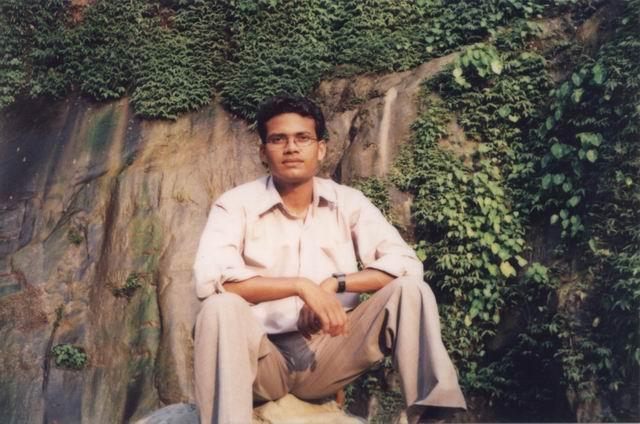
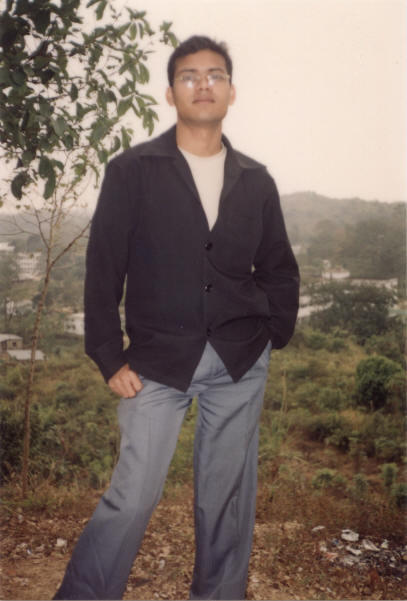
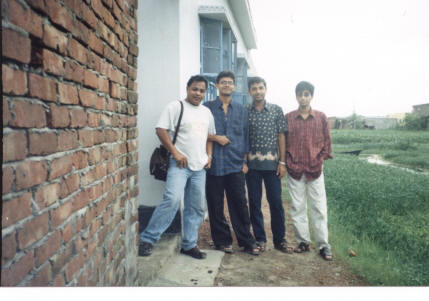
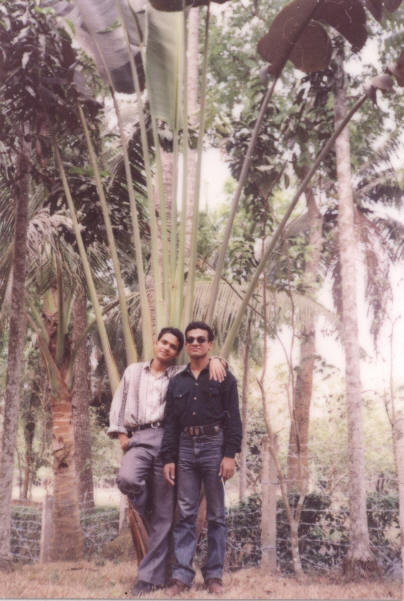
Recent Pictures ...

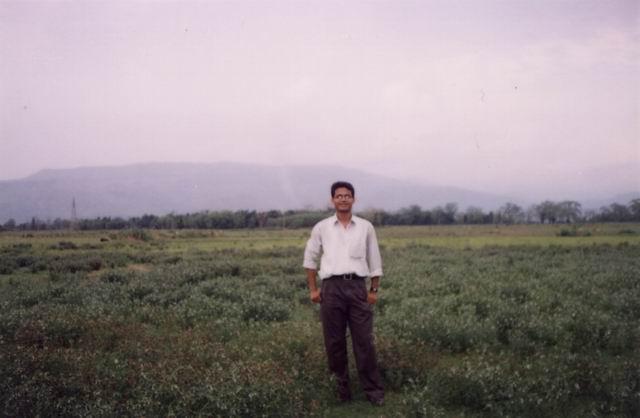
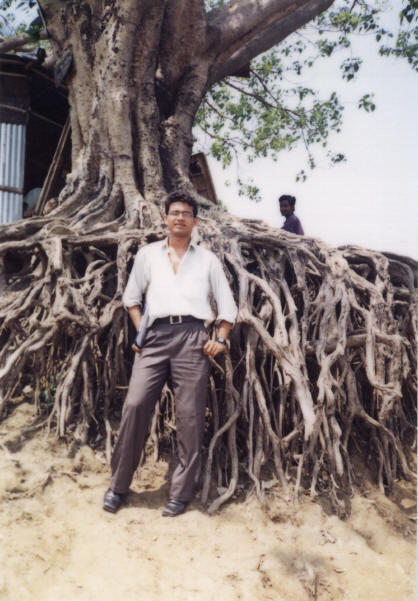
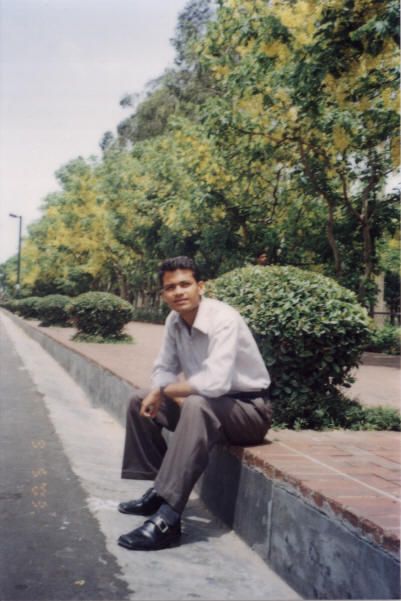
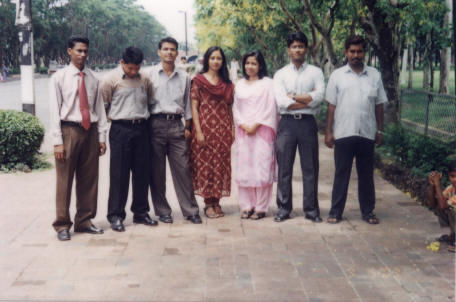
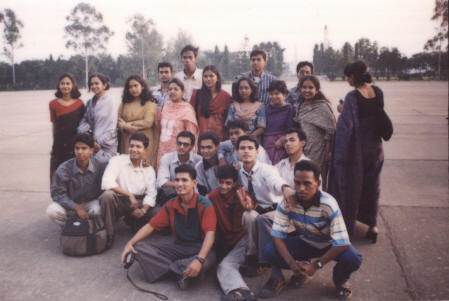
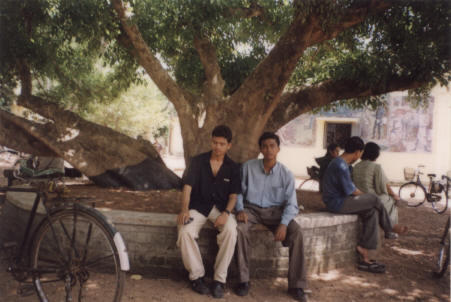
NAME of Friends (4th Batch Finance & Banking) and their Photo:


Mina and HE.


Tipu and Sohel at CRISL Tour.


Tina & HE.


Computer Lab at Dept. DU. 1


Computer Lab at Dept. DU. 2


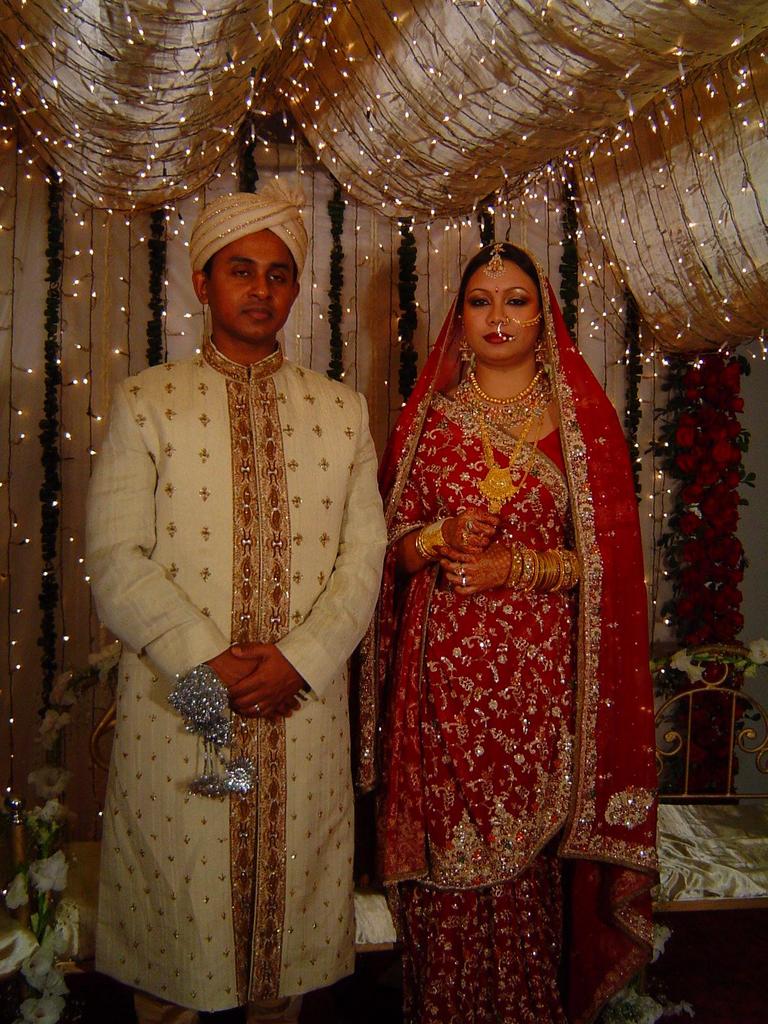
Jahed's Marriage & SHE.


Ershad & SHE.


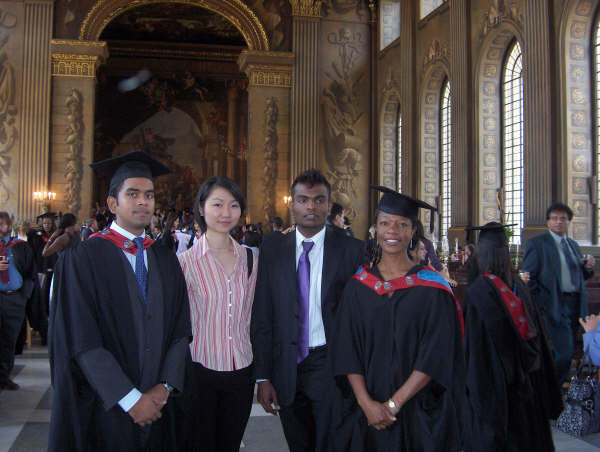
Convocation 1


Biswa's Lover.


Russel's Marriage and SHE.


Shova and HE.


Ahsan & His Friends (UK)

August 23, 2005

My Efforts...


The story of my website <www.khokonz.tk> starts some time in the middle of June 2003. When I decided to do something for my classmates, friends, and myself. After the final exam of BBA Program of Dhaka University, I have worked for World Bank and USAID Projects. I have realized that I am loosing communication to my classmates, friends day by day.

When I started MBA Program in July 2003 at Dhaka University, I have come to know that some of my classmates, friends are living abroad (USA, UK, Canada, Sweden, Japan, Australia) for higher studies. I decided to use Phones and Emails for communication.

As I am writing poems and short stories from my college life, some newspapers and magazines publishes that & my friends are always encourages time to time. So, I feel encourage to begin my website to integrate my classmates, friends forever.

As a self-learner, I have learned how to make a website by Front Page, HTML, Photoshop, Illustrator, Flash, Fireworks, Dream-weaver etc. I have passed many times by searching free stuff’s at Google, Yahoo and Microsoft. It was in the September of 2003 that I finally launched my websites by Free Hosting Site at <www.khokonz.4t.com>.

Finding the information regarding friends was an arduous task. Someone doesn't have Email ID, Phones etc, someone doesn't know how to use PC and NET etc. However, the journey continued.

Somewhere, in the beginning of the year 2005, I have decided to start Group Email at <4batch_finance_banking@googlegroups.com> for better integration. Less then 2 months, my all Group members (Finance and Banking Dept.) were shown tremendous responses.

It was sometime in February 2005 that I came up with the idea of coordinating the entire Friendships database and bringing it into one platform. It can be the perfect sense!

My mission was to represent the entire classmates (4th Batch, Finance & Banking Dept. DU) in one common platform accessible from all over the world. It's primary objectives are: Contact Phones, Email IDs, Pictures, Career Profiles and Recent News.

Importantly, when I come to know that my classmates, friends are getting right information at the right time around the world. I just feel happy.

Let the Friendship go on and on…

Khorshed Khokon, MBA

August 17, 2005

America's World Role

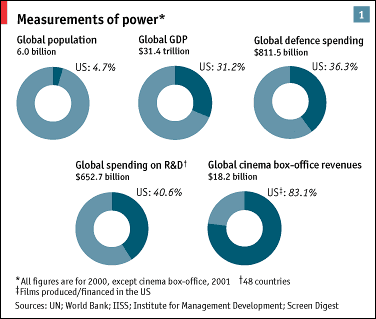
America now leads the world in all dimensions of power—military, economic, cultural, scientific (see chart 1)—by a margin out of all proportion to its population.


Look how they (American) seek to reshape the world. They have defined their war as one of good against evil, of civilization against terror, but have then butted their heads against the blood-stained brick wall that is the Israeli-Palestinian conflict. They have spoken about a “regime change” in Iraq, but have done little about it. They have said they favor democracy, but then hesitated to condemn an attempted coup in April against Venezuela's President Hugo Chavez. They have said they favor free trade, but then slapped tariffs on steel imports and subsidies on farming. They have rubbished foreign aid, then embraced it; supported a bankruptcy procedure for countries in financial crisis, then opposed it.

Bangladesh and PRSP


The general goal of the PRSP is to reduce poverty in phases so much so that by 2015 this global social scourge may be cut by half. This is also the grand aim of the UN as articulated through its Millennium Development Goals (MDGs). The global financial institution like the World Bank (WB), which is a major provider of development assistance to the developing economies and the LDCs, does also emphasize poverty reduction and hence preparation of the PRSP as a condition for receiving its development assistance. Which in other words means that the international donors, both bilateral and multilateral, have shifted significantly from their earlier focus on growth and development.

The failure of the previous model of development has forced the international donor community to rethink its strategy for development in the Third World. As a result, the issue of addressing poverty separately as a precondition for development and growth has now returned to center stage in development thinking. Hence the necessity of preparing the PRSP by countries like Bangladesh, still depending on donor assistance to plan their national budgets and implement their development activities.

The lead consultant of the anti-poverty document, however, has assured the nation that the PRSP has taken into account the real situation in the country as well as the problems of the ultra poor, urban poor, rights of the indigenous people, land and technology as required by the donors. The question of addressing the unique conditions of poverty in the Bangladesh society is pertinent to any poverty-reduction strategy in the local context, as the country has its own history of poverty. People's lack of access to social and state resources, poor governance, lack of transparency and accountability and pervasive corruption in the administration have their deleterious impact on the prospect for development in Bangladesh. Poverty is therefore directly related to these negative factors prejudicing the country's development efforts.

In this context, the whole gamut of development issues merits a very careful consideration at the time of finalizing the PRSP in order to map out a poor-friendly development path for Bangladesh.

August 10, 2005

Dr. APJ Abdul Kalam's speech...


I have THREE visions for India. In 3000 years of our history people from all over the world have come and invaded us, captured our lands, conquered our minds. From Alexander onwards, the Greeks, the Turks, the Moguls, the Portuguese, the British, the French, the Dutch, all of them came and looted us, took over what was ours. Yet we have not done this to any other nation.

We have not conquered anyone. We have not grabbed their land, their culture, and their history and tried to enforce our way of life on them. Why? Because we respect the freedom of others, that is why my FIRST vision is that of FREEDOM. I believe that India got its first vision of this in 1857, when we started the war of independence. It is this freedom that we must protect and nurture and build on. If we are not free, no one will respect us.

My SECOND vision for India is DEVELOPMENT. For fifty years we have been a developing nation. It is time we see ourselves as a developed nation. We are among top 5 nations of the world in terms of GDP. We have 10 percent growth rate in most areas. Our poverty levels are falling. Our achievements are being globally recognized today. Yet we lack the self-confidence to see ourselves as a developed nation, self-reliant and self-assured. Isn’t this incorrect?

I have a THIRD vision; India must stand up to the world. Because I believe that unless India stands up to the world, no one will respect us. Only strength respects strength. We must be strong not only as a military power but also as an economic power. Both must go hand-in-hand. My good fortune was to have worked with three great minds. Dr. Vikram Sarabhai of the Department of space, Professor Satish Dhawan, who succeeded him and Dr. Brahm Prakash father of nuclear material. I was lucky to have worked with all three of them closely and consider this the great opportunity of my life.

Why is the media here so negative? Why are we in India so embarrassed to recognize our own strengths, our achievements? Why are we in India so embarrassed to recognize our own strengths, our achievements? We are such a great nation. We have so many amazing success stories but we refuse to acknowledge them. Why? We are the first in milk production. We are number one in Remote sensing satellites. We are the second largest producer of wheat. We are the second largest producer of rice. Look at Dr. Sudarshan; he has transferred the tribal village into a self-sustaining, self-driving unit. There are millions of such achievements but our media is only obsessed in the bad news and failures and disasters.

I was in Tel Aviv once and I was reading the Israeli newspaper. It was this day after a lot of attacks and bombardments and deaths had taken place. The Hamas had struck. But the front page of the newspaper had the picture of a Jewish gentleman who in five years had transformed his desert and into an orchid and a granary. It was the inspiring picture that everyone woke up to. The gory details of killings, bombardments, deaths, were inside in the newspaper, buried among other news. In India we only read about death, sickness, terrorism, crime. Why are we so NEGATIVE?

I was in Hyderabad giving this lecture, when a 14-year-old girl asked me for my autograph. I asked her what her goal in life is: she replied: I want to live in a developed India. For her, you and I will have to build this developed India. You must proclaim.

India is not an under-developed nation; it is a highly developed nation. Allow me to come back with vengeance. Got 10 minutes for your country? YOU say that out Government is inefficient. YOU say that our laws are too old. YOU say that the municipality does not pick up the garbage. YOU say that the phones don’t work, the railways are a joke, the airline is the worst in the world, and mails never reach their destination. YOU say that our country has been fed to the dogs and is the absolute pits. YOU say, say and say. What do YOU do about it?

Take a person on his way to Singapore. Give Him a name? YOURS. Give him a face? YOURS. YOU walk out of the airport and you are at your international best.

In Singapore you don’t throw cigarette butts on the roads or eat in the stores. YOU are as proud of their Underground Links as they are. You pay $5 (approx.Rs.225/-) to drive through Orchard Road (equivalent of Mahim Causeway or Pedder Road) between 5 PM and 8 PM. YOU comeback to the parking lot to punch your parking ticket if you have over stayed in a restaurant or a shopping mall irrespective of your status identity.

In Singapore you don’t say anything, DO YOU? YOU wouldn’t dare to eat in public during Ramadan, in Dubai. YOU would not dare to go out without your head covered in Jeddah. YOU would not dare to buy an employee of the telephone exchange in London at 10 pounds (Rs.900/-) a month to, “see to it that my STD and ISD calls are billed to someone else. “YOU would not dare to speed beyond 55 mph (88 kmph) in Washington and then tell the traffic cop, “Jaanta Hai sala main kaun hoon (do you know who I am?). I am so and so’s son. Take your two bucks and get lost.

YOU wouldn’t chuck an empty coconut shell anywhere other than the garbage pail on the beaches in Australia and New Zealand. Why don’t YOU spit Paan on the streets of Tokyo? Why don’t YOU use examination jockeys or buy fake certificates in Boston? We are still talking of the same YOU. YOU who can respect and conform to a foreign system in other countries but cannot in your own. You who will throw papers and cigarettes on the road the moment you touch Indian ground.

If you can be an involved and appreciative citizen in an alien country why cannot you be the same here in India?

Once in an interview, the famous Ex-municipal commissioner of Bombay Mr. Tinaikar had a point to make. “Rich people’s dogs are walked on the streets to leave their affluent droppings all over the place,” he said. “And then the same people turn around to criticize and blame the authorities for inefficiency and dirty pavements. What do they expect the officers to do? Go down with a broom every time their dog feels the pressure in his bowels?

In America every dog owner has to clean up after his pet has done the job. Same in Japan. Will the Indian citizen do that here? He’s right. We go to the polls to choose a government and after that forfeit all responsibility.

We sit back wanting to be pampered and expect the government to do everything for us whilst our contribution is totally negative. We expect the government to clean up but we are not going to stop chucking garbage all over the place nor are we going to stop to pick up a stray piece of paper and throw it in the bin. We expect the railways to provide clean bathrooms but we are not going to learn the proper use of bathrooms. We want Indian Airlines and Air India to provide the best of food and toiletries but we are not going to stop pilfering at the least opportunity.

This applies even to the staff who is known not to pass on the service to the public. When it comes to burning social issues like those related to women, dowry, girl child and others, we make loud drawing room protestations and continue to do the reverse at home. Our excuse?” It’s the whole system, which has to change, how will it matter if I alone forego my son’s rights to a dowry. “So who’s going to change the system? What does a system consist of? Very conveniently for us it consists of our neighbors, other households, other cities, other communities and the government. But definitely not me and YOU.

When it comes to us actually making a positive contribution to The system we lock ourselves along with our families into a safe cocoon and look into the distance at countries far away and wait for a Mr. Clean to come along & work miracles for us with a majestic sweep of his hand. Or we leave the country and run away. Like lazy cowards hounded by our fears we run to America to bask in their glory and praise their system. When New York becomes insecure we run to England.

When England experience unemployment, we take the next flight out to the Gulf. When the Gulf is war struck, we demand to be rescued and brought home by the Indian government. Everybody is out to abuse and rape the country. Nobody thinks of feeding the system. Our conscience is mortgaged to money.

Dear Indians, The article is highly thought inductive, calls for a Great deal of introspection and pricks one’s conscience too. J.F. Kennedy’s words to his fellow Americans to relate to Indians?...

“Ask what we can do for India and do what has to be done to make India what America and other western countries are today”

August 09, 2005

Royals cost Britain £37m in 2004

The Royal Family cost Britons £36.7m last year, equivalent to 61p per taxpayer. Buckingham Palace said the figure, which excludes security costs, was at its lowest since 2001 and had fallen 2.3% in real terms since 2003-4.

August 01, 2005

ISO 9000 Certificates

President of Federation of Bangladesh Chambers of Commerce and Industries (FBCCI) Abdul Awal Mintoo recently said around 600 Bangladeshi companies have so far been certified by ISO 9000, a global standard for maintaining Quality Management System (QMS). But the number is growing quite slowly because most of the companies in Bangladesh are not completely aware of what ISO 9000 stands for.

July 31, 2005

Lyrics: Shania Twain

From This Moment On

“I do swear that I’ll always be there. I’d give anything and everything and I will always care. Through weakness and strength, happiness and sorrow, for better, for worse, I will love you with every beat of my heart”


From this moment life has begun
From this moment you are the one
Right beside you

Is where I belong
From this moment on

From this moment
I have been blessed
I live only for your happiness
And for your loveI’d give my last breath
From this moment on

I’d give my hand to you with all my heart
Can’t wait to live my life with you, can’t wait to start
You and I will never be apart
My dreams came true because of you
From this moment

As long as I liveI will love you,
I promise you this
There is nothing I wouldn’t give
From this moment on

You’re the reason I believe in love
And you’re the answer to my prayers from up above
All we need is just the two of us
My dreams came true because of you


July 28, 2005

Bluetooth Technology

It was in 1994 when Ericsson Inc. first invented this technology called Bluetooth named after Danish king Harald Bluetooth, who was successful to adjoin Norway and Denmark right in the manner technologies are being integrated today. But it wasn't until the year 2000 that Bluetooth became widely popular among devices.

Bluetooth transfers data at a rate of 721 Kbps, which is 3 times the average speed of parallel ports and 8 times the average speed of serial ports. This bandwidth is capable of transmitting voice, data, video and still images. Unlike IrDA (Infrared Data Association), Bluetooth frequency ranges quite a distance from a metre to 100 metres even at blockades.

Adamjee EPZ

Adamjee Jute Mills in Narayanganj, founded in 1957, was closed down in June 2002, after the nationalised industry had incurred a huge Tk 13 billion loss accumulated since the independence.

The AEPZ to be set up on the mills' 295 acre land will comprise 200 industrial plots. It eyes a $500 million export a year and is expected to create some 100,000 jobs. Investments to the tune of $250 million for 70 industrial units have already been proposed.

July 26, 2005

Apologies...

Positive world for the positive human being, Check out the list of great apologies of the world:

  • The second largest US bank JP Morgan Chase & Co. has publicly disclosed that two of its predecessor banks had received thousands of slaves as collateral prior to the Civil War. It offered a formal letter of apology and said it was creating a 5 million dollar scholarship fund for the African-American students from Louisiana.
  • Japanese apologised for the cruelty committed by its troops in the Far East during World War II.
  • Germany apologised for the suffering caused by its actions toward Jews and others.
  • Pope John Paul II apologised for the past sins of the Roman Catholic Church against non-Catholics.
  • Australia apologised for its mistreatment of the country's aborigine population.

July 25, 2005

Travelling...

I am travelling inside my mind, which is running inside the globe that is spinning around the sun. Everything about life is relative, yesterday, today and tomorrow, everything depending on time and motion, everything having its rightful place in the stream of events from birth to death.

July 21, 2005

Did you know....

  • Those who appear to be very strong in heart, are real weak and most susceptible?
  • Those who spend their time protecting others are the ones that really need someone to protect them?
  • The 3 most difficult things to say are : I love you, Sorry and Help me?
  • When you help someone, the help is returned in two-folds?
  • It's easier to say what you feel in writing than saying it to someone in the face? But did you know that it has more value when you say it to their face?
  • If you ask something in faith, your wishes are granted?
  • You can make your dreams come true? If you ask for it by faith and if you really know, you'd be surprised by what you could do.

July 14, 2005

Monsoon 1


A village woman dips into the pond near her house for water. This is age-old practice in our rural area particularly in the monsoon seasons of Bangladesh.


Look at the human life and water of my village (Tangail, 1991). Fisherman are always interesting character in our rural life. Wide looking area with monsoon light is the art of my country, Bangladesh.

June 20, 2005

Trivia 1

  • Two people can get married, but more people are needed in a divorce.
  • Anything is fair in love and war.
  • Late to remember and quick to forget.
  • Politics is a self-serving business in the name of the people.
  • He is like the fool who stays up all night trying to find out how he goes to sleep.
  • Life is either a dream or a nightmare. Superstition is when one is obsessed with either.

Confused on everything...

There was a time in my life (student life) when I could draw a line between opposites. Good was good and bad was bad. Innocent was innocent and guilty was guilty.

Then reality came to my world (professional life) and made me confused on everything. Now I can't tell the difference even between black and white.

Politics is the magic detergent that washes all stains, so that the same person returns like fresh laundry again and again. Get power, abuse it, step down and go clean.

Perhaps we have failed to audit our own behavior. Everyday we are swimming on calculator, trying to accomplish a life that is so-called professional standards.

The conflict of ideology


All ideological conflicts have claimed innocent lives in the name of larger interests. Check it out the list:

  • Mao Zhe Dong is responsible for over 30 million deaths in the name of communism in China.
  • Lenin sent 4 million and Stalin sent 20 million Russians to death over their struggle for communism.
  • Adolph Hitler's Nazi madness cost 35 million lives during the Second World War.
  • Pol Pot killed 2 million Cambodians and
  • Che Guevara ordered hundreds of people to execution under his watch.

Responsibilities…

What has been happening to us?

Everybody talks,
nobody listens.

Everybody seeks,
nobody finds.

Everybody looks,
nobody sees.

Everybody pretends,
nobody intends.

Everybody owns,
nobody shares.

Everybody commits,
nobody cares.

A Successful Man...

A successful man is a conglomerate story. He wants to become many in one. He is a business magnate, director of many companies, owner of a university, owner of a restaurant, and owner of a clinic. He wants everything money can buy including talent and dignity, proving that not only had he triumphed over poverty but also achieved a position in life to dispense what he could not get when he was growing up.

Corruption, chaos and conflict...

We have got more chiefs than Indians, more leaders than followers, more singers than listeners, more newspapers than readers, more banks than customers, more TV channels than time to watch, and more mouths than words.

Everyone is thinking, everyone is writing, singing, talking and initiating, yet we are not moving.

May 20, 2005

Poetry 1

Passion

I wish you bluebirds in the spring
To give your heart a song to sing
And then a kiss, but more than this
I wish you love
And in July, a lemonade
To cool you in some leafy glade
I wish you health, and more than wealth
I wish you love
My breaking heart and I agree
That you and I could never be
So with my best, my very best
I set you free I wish you shelter from the storm
A cozy fire to keep you
But most of all, when snowflakes fall

End of Time

Suddenly the world seems such a perfect place.

Suddenly it moves with such a perfect grace.
And there's no mountain too high, no river too wide.
Storm clouds may gather, and storms may collide
But I love you until the end of time.

Words

Words that hurt
Or do they heal

Words are mean
But do they ring true

Words untamed
Flying though the air

Words are useless
They prove nothing

Words free hostility
While emission poison

Words can kill
Heart will never recover

May 05, 2005

Poetry 2

At Last

Cherish your vision;
Cherish your ideals,
Cherish the music that stirs in your heart,
The beauty that forms in your mind,
The loveliness that drapes your purest thoughts.
If you remain true to them, your world will be built at last.

Inspiration

People are often unreasonable, illogical and self-centered.

Forgive them anyway.

If you are kind, people may accuse you of selfish, ulterior motives.
Be kind anyway.

If you are successful, you will win some false friends and some true enemies.
Succeed anyway.

If you are honest and frank, people may cheat you.
Be honest and frank anyway.

What you spend years building, someone may destroy overnight.
Build anyway.

If you find serenity and happiness, they may be jealous.
Be happy anyway.

The good you do today, people will often forget tomorrow.
Do good anyway.


April 30, 2005

April 19, 2005

USAID Tour...

USAID Project Tour 2003


I am at Ramu, Cox's Bazar


From left to right Hafiz, Khokon (Me), Polash, Masum, Afroz and Laila at Sylhet Tea Garden


I am at Badhaghat, Sunamganj


From left to right Hafiz, Khokon (Me), Laila, Eric (Our Boss), Polash, Afroz and Masum


I am at Sunamganj


Laila with me at National Parliament of Bangladesh


I am at National Parliament of Bangladesh


From left to right Khokon (Me), Hafiz, Laila, Polash, Masum and Afroz at Karamjal, Sundarban


From left to right Afroz, Laila and Khokon (Me) at Karamjal, Sundarban


From left to right Abed, Hafiz, Khokon (Me), Laila, Afroz, Polash and Chhunu Mama (Driver) at National Parliament of Bangladesh


I am at National Parliament of Bangladesh


From left to right Hafiz, Khokon (Me), Masum, Poalsh and Laila at Sylhet-Sunamganj Highways


I am at Gowainghat, Sylhet


I am at Madhabkunda Water Falls, Moulvibazar


I am at Madhabkunda Water Falls, Moulvibazar


From left to right Masum, Laila, Khokon (Me), Polash, Afroz and Hafiz at Satgambuj Mosque, Bagerhat


Abed, Polash and Khokon (Me) at Sunamganj-Badhaghat Road

Khokon (Me) and Laila at Gowainghat, Sylhet

I am at Kaptai, Rangamati

World Bank Tour...

World Bank Tour 2003
I am at Chandpur Tea Garden Banglow, Sunamganj
I am at Jaflong, Sylhet


I am at Jaflong, Sylhet


I am at Parjatan Motel, Sylhet

April 16, 2005

India Tour...

India Tour 2002


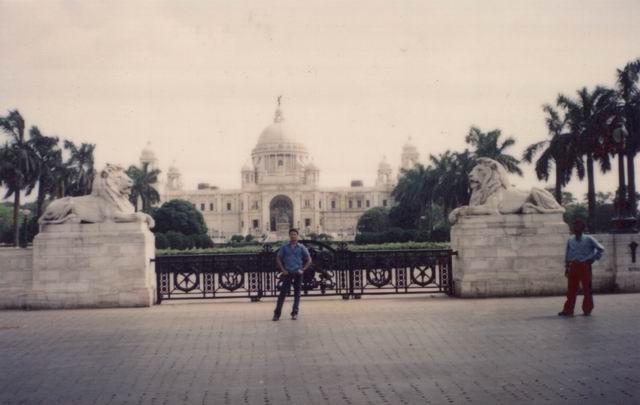
I am at Victoria Memorial, Kolkata, India


From left to rigth Khokon (Me) and Polash at Santiniketan, West Bengal, India

April 15, 2005

My Village...

My Village at Tangail, Bangladesh


From left to right Nashin, Khokon (Me), Sharif and Jahed 2001


My Village, Tangail 1997

April 14, 2005

Class Friends...

Friends (4th Batch Finance & Banking)


From left to right Khokon (Me) and Polash at BARD, Comilla, DU Picnic 1998


From left to right Khokon (Me) and Sohel at BARD, Comilla, DU Picnic 1998


From left to right all class mate at Shafipur Ansar Academy, Gazipur, DU Picnic 2000


From left to right all class mate at Shafipur Ansar Academy, Gazipur, DU Picnic 2000


From left to right all class mate at Shafipur Ansar Academy, Gazipur, DU Picnic 2000

March 17, 2005

Bangladesh: Banking


Financial sector of Bangladesh, like most developing countries, is dominated by banking enterprises. Banks at early stages of history of Bangladesh were nationalized and there was mismatch between assets and liabilities. The central bank of the country had limited tools to manage monetary policy. Direct tools namely determination of SLR/CRR, administered interest rate policy and moral suasion were the man instruments of monetary policy. Most banks pursued a policy of financial deepening through extending bank branches to the remote and rural areas without considering financial viability. In this situation, causality between economic growth and performance of the financial sector could not be established.

There was a major policy shift in the early 1980s when private sectors banks were allowed in the country. In addition to the existing 19 public sector and foreign banks, 10 new private banks opened their business during early 1980s. Thereafter, another 7 and 13 banks started commercial banking in the country during mid-1990s and early 2000s respectively. The sector embarked upon a Financial Sector Reform Program in the 1990s which primarily aimed at entrusting additional powers to the central bank by strengthening efficacy of its instruments. Interest rates were liberalized; open market operation was activated by introducing new bills. Attempts were made to improve governance in the financial sector. The pace of reform slowed down during the second half of 1990s, but picked up speed from the early part of the current decade.

Currently, the banking sector comprises of 4 nationalized commercial banks (NCBs), 5 government-owned specialized banks (SBs) dealing with development finance in specialized sectors, 30 private commercial banks (PCBs) and 10 foreign commercial banks (FCBs). The structure of the banking system has changed substantially over the last few years. NCBs’ role has gone down. Their share in total assets went down from 54 percent in 1998 to 40 percent in 2004. On the other hand, PCBs’ share went up from 27 percent in 1998 to 43 percent in 2004. The change reflects adoption and implementation of new policies for the banking sector.
.
Banking sector’s Regulatory reforms:

(a) Governance structure of banks has been strengthened; better disclosure and transparency standards have been introduced and dissemination to the public at large has been mandated;

(b) Some restrictions have been imposed on the composition and tenure of the bank Directors. The maximum number of Directors in a bank has been limited to 13;

(c) Bangladesh Bank's capacities to supervise and regulate banks effectively, monitor non-performing loans, enforce actions against banks found violating regulations and laws have been strengthened;

(d) Audit Committees were mandated for all banks with clear guidelines and TORs. Banks have been asked to strengthen their internal control system;

(e) The Bangladesh Bank recently introduced Early Warning System (EWS);

(f) Government borrowing from the banking system is now market based and the annual volume of borrowing is limited, allowing greater room for the private sector. Private sector credit grew at over 14 percent during the last fiscal year.

Core Risk Management Guidelines on five major risks e.g. credit risk management, foreign exchange risk management, asset-liability risk management, internal control and compliance, and anti-money laundering have been issued by the Bangladesh Bank. Stringent loan rescheduling conditions have been introduced to stop ever greening of loans. Financial instruments of varying tenure such as repo and reverse repo, and five-year and ten-year Government Investment Bonds have been introduced. Efforts are continued to develop the government and corporate bond market and the functioning of the primary dealership. The BB and the Securities and Exchange Commission agreed to allow the government bonds to be traded in the stock exchange. BB, SEC and NBR have developed an enabling legal, regulatory framework for bonds/ securitization of receivables. The interest rates have become flexible and now show a declining trend. Introduction of repurchase agreement and reverse repurchase agreement, strict limit on government borrowing from banks, reduction in SLR and reduction in yield on T-bills have contributed to this downward flexibility.

Banking sector’s Legal reforms:

Beginning 2001-02, some Acts were either amended or enacted to revitalize the financial sector. Money Laundering Prevention Act, 2002 gave BB responsibility for prevention of money laundering offences. Banks Nationalization Order was amended in 2003. Among others, the amendment requires disclosure of financial statements to the Board and the BB and gives BB greater say in the appointment and removal of MDs. Bank Company (Amendment) Act 2003, helped the BB to raise capital requirement of the banks to Tk. 1 billion. Financial Loan Court Act 2003 provided the authority to set up special courts dealing exclusively with default loans. It has prescribed time limits for courts to give judgment on original and appeal suits; mandated banks to sell collaterized security before filing cases; and provided alternative dispute resolution mechanism.
Banking sector’s Institutional reforms:

As a central bank, the Bangladesh Bank is mandated to promote the operation of a stable and sound financial system. Bangladesh Bank also is mandated to conduct the monetary policy to ensure price stability and support growth. The Bangladesh Bank Strengthening Program includes

(a) Computerization of the operations of the Bangladesh Bank,

(b) Human resource development through reforms of recruitment, promotion and compensation policies,

(c) Restructuring the different departments,

(d) Reengineering the business processes,

(e) Automation of the Clearing House,

(f) Capacity building in the core activities i.e. monetary policy, regulation of the financial sector, and research and policy analysis. The goal is to transform the decades-old traditional and manual system to a modern, automated system.

The improvement in capacity will enable the Bangladesh Bank to perform its roles effectively and assert its independence, while winning the respect of the stakeholders.

Impact of Reform:
.
Following restructuring initiatives, financial sector further deepened as measured by M2/GDP ratio. The ratio, which stood at 28 percent in FY 1996, went up to 39 percent in FY 2004. Two other indicators namely, total credit to GDP ratio and private credit to GDP ratios show similar trend.

The impact of the reform can also be realized by analyzing the developments in the CAMEL framework, which considers Capital Adequacy, Asset Quality, Management Soundness, Earnings and Liquidity. Capital Adequacy: The BB raised minimum capital requirement on risk-weighted basis, as per Basle standard, from 8% to 9% in 2002. Minimum capital requirement of banks was raised to Tk. 1000 million ($17 million) from Tk. 400 million in 2003. The minimum capital requirement of Non-Bank Financial Institutions (NBFIs) was also raised from Tk. 50 million to Tk. 100 million in 2001 and further to Tk. 250 million from June 2003.

Many banks have floated their shares in capital market to achieve the target of capital adequacy. Most banks, other than NCBs, are now well capitalized. PCBs’ capital adequacy ratio has increased from 9.9 percent in December 2001 to 10.3 percent in December 2004. Private banks are now listed in the capital market which helped revive the capital market. In total market capitalization, the share of banks rose from 10% in June 1998 to 47% in December 2004;

The reasons for increasing the minimum capital requirement are not often clearly understood. Firstly, the higher is the net worth of a bank in relation to deposits, the more likely it is that it will be able to weather any shock, including bank collapse. Equally importantly, the size of the equity is a measure of what stakes the owner-directors have in seeing that the banks are run profitably. The higher the stakes, the less will be the temptation to do things to the detriment of the bank’s interest.

Asset Quality: Asset quality remained poor all through the history of Bangladesh. However, there have been significant improvements in recent years. Much of the problem is a manifestation of corruption, politics of public ownership, weak banking management, poor staffing quality, inadequate regulation and weak supervision. Actions taken over the last 3 years described earlier have led to significant improvements, which include improvement in NPL position.

Non-Performing Loan:

Ratio Management Soundness: Though it is difficult to measure management soundness, attempt may be made by using different ratios such as total expenditure to total income, operating expenses to total expenses, earnings and operating expenses per employee, and interest rate spread. In particular, a high and increasing expenditure to income ratio indicates the operating inefficiencies that could be due to weaknesses in management.

Expenditure to income ratio of the banking sector has improved from 99.9 percent in 2000 to 93.9 percent in 2003.

Earnings: Earning and profitability of the banking sector have also improved in recent years as measured by return on assets (ROA) and return on equity (ROE). ROA improved from 0.01 percent in 2000 to 0.7 percent in 2004 and ROE improved from 0.3 percent to 13.0 percent during the same period. Although the net interest income of the NCBs has been negative since 2000, the overall banking industry experienced a consistent upward trend. The performance of private banks is significantly better than that of public ones. It is also notable, however, that some improvement of NCBs has happened only recently.
Liquidity: Presently, commercial banks are required to hold 16 percent of their total deposits as statutory liquidity requirement (SLR) which includes a 4.5 percent cash reserve requirement (CRR). Liquidity indicators measured as percentage of demand and time liabilities (excluding inter bank items) of the banks indicate that all the banks maintained excess liquidity over the minimum requirement. However, foreign private banks maintained higher levels of liquidity than domestic banks. In 2004 excess liquidity has gone down to 8.7 percent from the level of 9.9 percent last year.
Excess Liquidity Ratio:

From a poorly performing sector owing to lack of competition, weak governance, public ownership and inefficient management, the banking industry is, after the recent reform initiatives taken, poised for rapid development. Good progress has been made in deregulating interest rate, functioning of the floating exchange system, strengthening prudential regulations, enhancing the capacity of the central bank, introducing new monetary instruments, strengthening legal environment and reforming nationalized commercial banks. Private commercial banks have now greater share in assets, credit and deposits.

Conclusion:

While a lot has been achieved during the past three years, it is needed to continue to move forward with additional measures to widen and deepen reforms. As the demand for loans in the traditional areas becomes more and more limited, the BB is encouraging banks to find new areas of lending; areas including agriculture and agro based industries, small enterprises, housing and consumers’ credit. As regards of loans to small business, Bangladesh Bank has established a Tk. 1 billion refinancing facility under which participating financial institutions can get refinancing at the bank rate i.e. five percent, for loans between Tk. 0.2 million and Tk. 5.0 million disbursed to enterprises anywhere in Bangladesh, as either term loan or working capital. The IDA has approved a contribution of $10 million and the ADB is finalizing a proposal to contribute $30 million to the Bangladesh Bank's Refinancing Facility. Bangladesh Bank has also a refinancing facility for agro-based industries of larger sizes located in rural areas.

The other important challenge that the banking sector is facing, is introduction of information technology in the banking system in an aggressive manner. This is required to improve management efficiency, reduce operational cost, improve customer services, and increase transparency. The BB would continue the journey on the path it has chosen.

>> Source: Financial sector reform in Bangladesh: Developments and challenges by Fakhruddin Ahmed, Former Governor, Bangladesh Bank.